Get trending papers in your email inbox once a day!
Get trending papers in your email inbox!
Subscribe
CoDA: Agentic Systems for Collaborative Data Visualization
Deep research has revolutionized data analysis, yet data scientists still devote substantial time to manually crafting visualizations, highlighting the need for robust automation from natural language queries. However, current systems struggle with complex datasets containing multiple files and iterative refinement. Existing approaches, including simple single- or multi-agent systems, often oversimplify the task, focusing on initial query parsing while failing to robustly manage data complexity, code errors, or final visualization quality. In this paper, we reframe this challenge as a collaborative multi-agent problem. We introduce CoDA, a multi-agent system that employs specialized LLM agents for metadata analysis, task planning, code generation, and self-reflection. We formalize this pipeline, demonstrating how metadata-focused analysis bypasses token limits and quality-driven refinement ensures robustness. Extensive evaluations show CoDA achieves substantial gains in the overall score, outperforming competitive baselines by up to 41.5%. This work demonstrates that the future of visualization automation lies not in isolated code generation but in integrated, collaborative agentic workflows.

GenMAC: Compositional Text-to-Video Generation with Multi-Agent Collaboration
Text-to-video generation models have shown significant progress in the recent years. However, they still struggle with generating complex dynamic scenes based on compositional text prompts, such as attribute binding for multiple objects, temporal dynamics associated with different objects, and interactions between objects. Our key motivation is that complex tasks can be decomposed into simpler ones, each handled by a role-specialized MLLM agent. Multiple agents can collaborate together to achieve collective intelligence for complex goals. We propose GenMAC, an iterative, multi-agent framework that enables compositional text-to-video generation. The collaborative workflow includes three stages: Design, Generation, and Redesign, with an iterative loop between the Generation and Redesign stages to progressively verify and refine the generated videos. The Redesign stage is the most challenging stage that aims to verify the generated videos, suggest corrections, and redesign the text prompts, frame-wise layouts, and guidance scales for the next iteration of generation. To avoid hallucination of a single MLLM agent, we decompose this stage to four sequentially-executed MLLM-based agents: verification agent, suggestion agent, correction agent, and output structuring agent. Furthermore, to tackle diverse scenarios of compositional text-to-video generation, we design a self-routing mechanism to adaptively select the proper correction agent from a collection of correction agents each specialized for one scenario. Extensive experiments demonstrate the effectiveness of GenMAC, achieving state-of-the art performance in compositional text-to-video generation.





BMW Agents -- A Framework For Task Automation Through Multi-Agent Collaboration
Autonomous agents driven by Large Language Models (LLMs) offer enormous potential for automation. Early proof of this technology can be found in various demonstrations of agents solving complex tasks, interacting with external systems to augment their knowledge, and triggering actions. In particular, workflows involving multiple agents solving complex tasks in a collaborative fashion exemplify their capacity to operate in less strict and less well-defined environments. Thus, a multi-agent approach has great potential for serving as a backbone in many industrial applications, ranging from complex knowledge retrieval systems to next generation robotic process automation. Given the reasoning abilities within the current generation of LLMs, complex processes require a multi-step approach that includes a plan of well-defined and modular tasks. Depending on the level of complexity, these tasks can be executed either by a single agent or a group of agents. In this work, we focus on designing a flexible agent engineering framework with careful attention to planning and execution, capable of handling complex use case applications across various domains. The proposed framework provides reliability in industrial applications and presents techniques to ensure a scalable, flexible, and collaborative workflow for multiple autonomous agents working together towards solving tasks.

Next Steps for Human-Centered Generative AI: A Technical Perspective
Through iterative, cross-disciplinary discussions, we define and propose next-steps for Human-centered Generative AI (HGAI) from a technical perspective. We contribute a roadmap that lays out future directions of Generative AI spanning three levels: Aligning with human values; Accommodating humans' expression of intents; and Augmenting humans' abilities in a collaborative workflow. This roadmap intends to draw interdisciplinary research teams to a comprehensive list of emergent ideas in HGAI, identifying their interested topics while maintaining a coherent big picture of the future work landscape.


Jointly Generating Multi-view Consistent PBR Textures using Collaborative Control
Multi-view consistency remains a challenge for image diffusion models. Even within the Text-to-Texture problem, where perfect geometric correspondences are known a priori, many methods fail to yield aligned predictions across views, necessitating non-trivial fusion methods to incorporate the results onto the original mesh. We explore this issue for a Collaborative Control workflow specifically in PBR Text-to-Texture. Collaborative Control directly models PBR image probability distributions, including normal bump maps; to our knowledge, the only diffusion model to directly output full PBR stacks. We discuss the design decisions involved in making this model multi-view consistent, and demonstrate the effectiveness of our approach in ablation studies, as well as practical applications.




GenAgent: Build Collaborative AI Systems with Automated Workflow Generation -- Case Studies on ComfyUI
Much previous AI research has focused on developing monolithic models to maximize their intelligence and capability, with the primary goal of enhancing performance on specific tasks. In contrast, this paper explores an alternative approach: collaborative AI systems that use workflows to integrate models, data sources, and pipelines to solve complex and diverse tasks. We introduce GenAgent, an LLM-based framework that automatically generates complex workflows, offering greater flexibility and scalability compared to monolithic models. The core innovation of GenAgent lies in representing workflows with code, alongside constructing workflows with collaborative agents in a step-by-step manner. We implement GenAgent on the ComfyUI platform and propose a new benchmark, OpenComfy. The results demonstrate that GenAgent outperforms baseline approaches in both run-level and task-level evaluations, showing its capability to generate complex workflows with superior effectiveness and stability.

Long-Video Audio Synthesis with Multi-Agent Collaboration
Video-to-audio synthesis, which generates synchronized audio for visual content, critically enhances viewer immersion and narrative coherence in film and interactive media. However, video-to-audio dubbing for long-form content remains an unsolved challenge due to dynamic semantic shifts, temporal misalignment, and the absence of dedicated datasets. While existing methods excel in short videos, they falter in long scenarios (e.g., movies) due to fragmented synthesis and inadequate cross-scene consistency. We propose LVAS-Agent, a novel multi-agent framework that emulates professional dubbing workflows through collaborative role specialization. Our approach decomposes long-video synthesis into four steps including scene segmentation, script generation, sound design and audio synthesis. Central innovations include a discussion-correction mechanism for scene/script refinement and a generation-retrieval loop for temporal-semantic alignment. To enable systematic evaluation, we introduce LVAS-Bench, the first benchmark with 207 professionally curated long videos spanning diverse scenarios. Experiments demonstrate superior audio-visual alignment over baseline methods. Project page: https://lvas-agent.github.io



Sketch2BIM: A Multi-Agent Human-AI Collaborative Pipeline to Convert Hand-Drawn Floor Plans to 3D BIM
This study introduces a human-in-the-loop pipeline that converts unscaled, hand-drawn floor plan sketches into semantically consistent 3D BIM models. The workflow leverages multimodal large language models (MLLMs) within a multi-agent framework, combining perceptual extraction, human feedback, schema validation, and automated BIM scripting. Initially, sketches are iteratively refined into a structured JSON layout of walls, doors, and windows. Later, these layouts are transformed into executable scripts that generate 3D BIM models. Experiments on ten diverse floor plans demonstrate strong convergence: openings (doors, windows) are captured with high reliability in the initial pass, while wall detection begins around 83% and achieves near-perfect alignment after a few feedback iterations. Across all categories, precision, recall, and F1 scores remain above 0.83, and geometric errors (RMSE, MAE) progressively decrease to zero through feedback corrections. This study demonstrates how MLLM-driven multi-agent reasoning can make BIM creation accessible to both experts and non-experts using only freehand sketches.
AgentRxiv: Towards Collaborative Autonomous Research
Progress in scientific discovery is rarely the result of a single "Eureka" moment, but is rather the product of hundreds of scientists incrementally working together toward a common goal. While existing agent workflows are capable of producing research autonomously, they do so in isolation, without the ability to continuously improve upon prior research results. To address these challenges, we introduce AgentRxiv-a framework that lets LLM agent laboratories upload and retrieve reports from a shared preprint server in order to collaborate, share insights, and iteratively build on each other's research. We task agent laboratories to develop new reasoning and prompting techniques and find that agents with access to their prior research achieve higher performance improvements compared to agents operating in isolation (11.4% relative improvement over baseline on MATH-500). We find that the best performing strategy generalizes to benchmarks in other domains (improving on average by 3.3%). Multiple agent laboratories sharing research through AgentRxiv are able to work together towards a common goal, progressing more rapidly than isolated laboratories, achieving higher overall accuracy (13.7% relative improvement over baseline on MATH-500). These findings suggest that autonomous agents may play a role in designing future AI systems alongside humans. We hope that AgentRxiv allows agents to collaborate toward research goals and enables researchers to accelerate discovery.

AgileCoder: Dynamic Collaborative Agents for Software Development based on Agile Methodology
Software agents have emerged as promising tools for addressing complex software engineering tasks. However, existing works oversimplify software development workflows by following the waterfall model. Thus, we propose AgileCoder, a multi-agent system that integrates Agile Methodology (AM) into the framework. This system assigns specific AM roles such as Product Manager, Developer, and Tester to different agents, who then collaboratively develop software based on user inputs. AgileCoder enhances development efficiency by organizing work into sprints, focusing on incrementally developing software through sprints. Additionally, we introduce Dynamic Code Graph Generator, a module that creates a Code Dependency Graph dynamically as updates are made to the codebase. This allows agents to better comprehend the codebase, leading to more precise code generation and modifications throughout the software development process. AgileCoder surpasses existing benchmarks, like ChatDev and MetaGPT, establishing a new standard and showcasing the capabilities of multi-agent systems in advanced software engineering environments. Our source code can be found at https://github.com/FSoft-AI4Code/AgileCoder.

MetaGPT: Meta Programming for Multi-Agent Collaborative Framework
Recently, remarkable progress has been made in automated task-solving through the use of multi-agent driven by large language models (LLMs). However, existing LLM-based multi-agent works primarily focus on solving simple dialogue tasks, and complex tasks are rarely studied, mainly due to the LLM hallucination problem. This type of hallucination becomes cascading when naively chaining multiple intelligent agents, resulting in a failure to effectively address complex problems. Therefore, we introduce MetaGPT, an innovative framework that incorporates efficient human workflows as a meta programming approach into LLM-based multi-agent collaboration. Specifically, MetaGPT encodes Standardized Operating Procedures (SOPs) into prompts to enhance structured coordination. Subsequently, it mandates modular outputs, empowering agents with domain expertise comparable to human professionals, to validate outputs and minimize compounded errors. In this way, MetaGPT leverages the assembly line paradigm to assign diverse roles to various agents, thereby establishing a framework that can effectively and cohesively deconstruct complex multi-agent collaborative problems. Our experiments on collaborative software engineering benchmarks demonstrate that MetaGPT generates more coherent and correct solutions compared to existing chat-based multi-agent systems. This highlights the potential of integrating human domain knowledge into multi-agent systems, thereby creating new opportunities to tackle complex real-world challenges. The GitHub repository of this project is publicly available on:https://github.com/geekan/MetaGPT.


Stronger Together: On-Policy Reinforcement Learning for Collaborative LLMs
Multi-agent systems (MAS) and reinforcement learning (RL) are widely used to enhance the agentic capabilities of large language models (LLMs). MAS improves task performance through role-based orchestration, while RL uses environmental rewards to learn stronger policies, such as GRPO-style optimization. However, applying on-policy RL to MAS remains underexplored and presents unique challenges. Algorithmically, standard GRPO grouping assumptions break down because prompts vary by role and by turn. System-wise, the training stack must support MAS-workflow rollouts and on-policy updates for both single-policy and multi-policy models. We propose AT-GRPO, which includes (i) an agent- and turn-wise grouped RL algorithm tailored to MAS and (ii) a training system that supports both single- and multi-policy regimes. Across game, planning, coding, and math tasks, AT-GRPO delivers substantial gains. On long-horizon planning, it increases accuracy from a 14.0 to 47.0 percent single-agent RL baseline to 96.0 to 99.5 percent. It also improves reasoning performance, with average gains of 3.87 to 7.62 percent on coding tasks and 9.0 to 17.93 percent on math. Code and environments are available at: https://github.com/pettingllms-ai/PettingLLMs.


PyGen: A Collaborative Human-AI Approach to Python Package Creation
The principles of automation and innovation serve as foundational elements for advancement in contemporary science and technology. Here, we introduce Pygen, an automation platform designed to empower researchers, technologists, and hobbyists to bring abstract ideas to life as core, usable software tools written in Python. Pygen leverages the immense power of autoregressive large language models to augment human creativity during the ideation, iteration, and innovation process. By combining state-of-the-art language models with open-source code generation technologies, Pygen has significantly reduced the manual overhead of tool development. From a user prompt, Pygen automatically generates Python packages for a complete workflow from concept to package generation and documentation. The findings of our work show that Pygen considerably enhances the researcher's productivity by enabling the creation of resilient, modular, and well-documented packages for various specialized purposes. We employ a prompt enhancement approach to distill the user's package description into increasingly specific and actionable. While being inherently an open-ended task, we have evaluated the generated packages and the documentation using Human Evaluation, LLM-based evaluation, and CodeBLEU, with detailed results in the results section. Furthermore, we documented our results, analyzed the limitations, and suggested strategies to alleviate them. Pygen is our vision of ethical automation, a framework that promotes inclusivity, accessibility, and collaborative development. This project marks the beginning of a large-scale effort towards creating tools where intelligent agents collaborate with humans to improve scientific and technological development substantially. Our code and generated examples are open-sourced at [https://github.com/GitsSaikat/Pygen]

AIssistant: An Agentic Approach for Human--AI Collaborative Scientific Work on Reviews and Perspectives in Machine Learning
Advances in AI-assisted research have introduced powerful tools for literature retrieval, hypothesis generation, experimentation, and manuscript preparation. However, systems remain fragmented and lack human-centred workflows. To address these gaps, we introduce AIssistant, an agentic, open-source Human-AI collaborative framework designed to simplify the end-to-end creation of scientific workflows. Since our development is still in an early stage, we present here the first experiments with AIssistant for perspective and review research papers in machine learning. Our system integrates modular tools and agents for literature synthesis, section-wise experimentation, citation management, and automatic LaTeX paper text generation, while maintaining human oversight at every stage to ensure accuracy, coherence, and scholarly rigour. We conducted a comprehensive evaluation across three layers: (1) Independent Human Review, following NeurIPS double-blind standards; (2) Automated LLM Review, using GPT-5 as a scalable human review proxy; and (3) Program Chair Oversight, where the chair monitors the entire review process and makes final validation and acceptance decisions. The results demonstrate that AIssistant improves drafting efficiency and thematic consistency. Nonetheless, Human-AI collaboration remains essential for maintaining factual correctness, methodological soundness, and ethical compliance. Despite its effectiveness, we identify key limitations, including hallucinated citations, difficulty adapting to dynamic paper structures, and incomplete integration of multimodal content.

Towards Conversational AI for Human-Machine Collaborative MLOps
This paper presents a Large Language Model (LLM) based conversational agent system designed to enhance human-machine collaboration in Machine Learning Operations (MLOps). We introduce the Swarm Agent, an extensible architecture that integrates specialized agents to create and manage ML workflows through natural language interactions. The system leverages a hierarchical, modular design incorporating a KubeFlow Pipelines (KFP) Agent for ML pipeline orchestration, a MinIO Agent for data management, and a Retrieval-Augmented Generation (RAG) Agent for domain-specific knowledge integration. Through iterative reasoning loops and context-aware processing, the system enables users with varying technical backgrounds to discover, execute, and monitor ML pipelines; manage datasets and artifacts; and access relevant documentation, all via intuitive conversational interfaces. Our approach addresses the accessibility gap in complex MLOps platforms like Kubeflow, making advanced ML tools broadly accessible while maintaining the flexibility to extend to other platforms. The paper describes the architecture, implementation details, and demonstrates how this conversational MLOps assistant reduces complexity and lowers barriers to entry for users across diverse technical skill levels.
LIMI: Less is More for Agency
We define Agency as the emergent capacity of AI systems to function as autonomous agents actively discovering problems, formulating hypotheses, and executing solutions through self-directed engagement with environments and tools. This fundamental capability marks the dawn of the Age of AI Agency, driven by a critical industry shift: the urgent need for AI systems that don't just think, but work. While current AI excels at reasoning and generating responses, industries demand autonomous agents that can execute tasks, operate tools, and drive real-world outcomes. As agentic intelligence becomes the defining characteristic separating cognitive systems from productive workers, efficiently cultivating machine autonomy becomes paramount. Current approaches assume that more data yields better agency, following traditional scaling laws from language modeling. We fundamentally challenge this paradigm. LIMI (Less Is More for Intelligent Agency) demonstrates that agency follows radically different development principles. Through strategic focus on collaborative software development and scientific research workflows, we show that sophisticated agentic intelligence can emerge from minimal but strategically curated demonstrations of autonomous behavior. Using only 78 carefully designed training samples, LIMI achieves 73.5% on comprehensive agency benchmarks, dramatically outperforming state-of-the-art models: Kimi-K2-Instruct (24.1%), DeepSeek-V3.1 (11.9%), Qwen3-235B-A22B-Instruct (27.5%), and GLM-4.5 (45.1%). Most strikingly, LIMI demonstrates 53.7% improvement over models trained on 10,000 samples-achieving superior agentic intelligence with 128 times fewer samples. Our findings establish the Agency Efficiency Principle: machine autonomy emerges not from data abundance but from strategic curation of high-quality agentic demonstrations.



BioinspiredLLM: Conversational Large Language Model for the Mechanics of Biological and Bio-inspired Materials
The study of biological materials and bio-inspired materials science is well established; however, surprisingly little knowledge has been systematically translated to engineering solutions. To accelerate discovery and guide insights, an open-source autoregressive transformer large language model (LLM), BioinspiredLLM, is reported. The model was finetuned with a corpus of over a thousand peer-reviewed articles in the field of structural biological and bio-inspired materials and can be prompted to recall information, assist with research tasks, and function as an engine for creativity. The model has proven that it is able to accurately recall information about biological materials and is further enhanced with enhanced reasoning ability, as well as with retrieval-augmented generation to incorporate new data during generation that can also help to traceback sources, update the knowledge base, and connect knowledge domains. BioinspiredLLM also has been shown to develop sound hypotheses regarding biological materials design and remarkably so for materials that have never been explicitly studied before. Lastly, the model showed impressive promise in collaborating with other generative artificial intelligence models in a workflow that can reshape the traditional materials design process. This collaborative generative artificial intelligence method can stimulate and enhance bio-inspired materials design workflows. Biological materials are at a critical intersection of multiple scientific fields and models like BioinspiredLLM help to connect knowledge domains.
Helmsman: Autonomous Synthesis of Federated Learning Systems via Multi-Agent Collaboration
Federated Learning (FL) offers a powerful paradigm for training models on decentralized data, but its promise is often undermined by the immense complexity of designing and deploying robust systems. The need to select, combine, and tune strategies for multifaceted challenges like data heterogeneity and system constraints has become a critical bottleneck, resulting in brittle, bespoke solutions. To address this, we introduce Helmsman, a novel multi-agent system that automates the end-to-end synthesis of federated learning systems from high-level user specifications. It emulates a principled research and development workflow through three collaborative phases: (1) interactive human-in-the-loop planning to formulate a sound research plan, (2) modular code generation by supervised agent teams, and (3) a closed-loop of autonomous evaluation and refinement in a sandboxed simulation environment. To facilitate rigorous evaluation, we also introduce AgentFL-Bench, a new benchmark comprising 16 diverse tasks designed to assess the system-level generation capabilities of agentic systems in FL. Extensive experiments demonstrate that our approach generates solutions competitive with, and often superior to, established hand-crafted baselines. Our work represents a significant step towards the automated engineering of complex decentralized AI systems.
Machine Translation for Nko: Tools, Corpora and Baseline Results
Currently, there is no usable machine translation system for Nko, a language spoken by tens of millions of people across multiple West African countries, which holds significant cultural and educational value. To address this issue, we present a set of tools, resources, and baseline results aimed towards the development of usable machine translation systems for Nko and other languages that do not currently have sufficiently large parallel text corpora available. (1) Friaparallelel: A novel collaborative parallel text curation software that incorporates quality control through copyedit-based workflows. (2) Expansion of the FLoRes-200 and NLLB-Seed corpora with 2,009 and 6,193 high-quality Nko translations in parallel with 204 and 40 other languages. (3) nicolingua-0005: A collection of trilingual and bilingual corpora with 130,850 parallel segments and monolingual corpora containing over 3 million Nko words. (4) Baseline bilingual and multilingual neural machine translation results with the best model scoring 30.83 English-Nko chrF++ on FLoRes-devtest.
SwingArena: Competitive Programming Arena for Long-context GitHub Issue Solving
We present SwingArena, a competitive evaluation framework for Large Language Models (LLMs) that closely mirrors real-world software development workflows. Unlike traditional static benchmarks, SwingArena models the collaborative process of software iteration by pairing LLMs as submitters, who generate patches, and reviewers, who create test cases and verify the patches through continuous integration (CI) pipelines. To support these interactive evaluations, we introduce a retrieval-augmented code generation (RACG) module that efficiently handles long-context challenges by providing syntactically and semantically relevant code snippets from large codebases, supporting multiple programming languages (C++, Python, Rust, and Go). This enables the framework to scale across diverse tasks and contexts while respecting token limitations. Our experiments, using over 400 high-quality real-world GitHub issues selected from a pool of 2,300 issues, show that models like GPT-4o excel at aggressive patch generation, whereas DeepSeek and Gemini prioritize correctness in CI validation. SwingArena presents a scalable and extensible methodology for evaluating LLMs in realistic, CI-driven software development settings. More details are available on our project page: swing-bench.github.io

BioAnalyst: A Foundation Model for Biodiversity
The accelerating loss of biodiversity presents critical challenges for ecological research and conservation strategies. The preservation of biodiversity is paramount for maintaining ecological balance and ensuring the sustainability of ecosystems. However, biodiversity faces numerous threats, including habitat loss, climate change, and the proliferation of invasive species. Addressing these and other ecology-related challenges, both at local and global scales, requires comprehensive monitoring, predictive and conservation planning capabilities. Artificial Intelligence (AI) Foundation Models (FMs) have gained significant momentum in numerous scientific domains by leveraging vast datasets to learn general-purpose representations adaptable to various downstream tasks. This paradigm holds immense promise for biodiversity conservation. In response, we introduce BioAnalyst, the first Foundation Model tailored for biodiversity analysis and conservation planning. BioAnalyst employs a transformer-based architecture, pre-trained on extensive multi-modal datasets encompassing species occurrence records, remote sensing indicators, climate and environmental variables. BioAnalyst is designed for adaptability, allowing for fine-tuning of a range of downstream tasks, such as species distribution modelling, habitat suitability assessments, invasive species detection, and population trend forecasting. We evaluate the model's performance on two downstream use cases, demonstrating its generalisability compared to existing methods, particularly in data-scarce scenarios for two distinct use-cases, establishing a new accuracy baseline for ecological forecasting. By openly releasing BioAnalyst and its fine-tuning workflows to the scientific community, we aim to foster collaborative efforts in biodiversity modelling and advance AI-driven solutions to pressing ecological challenges.
LawFlow : Collecting and Simulating Lawyers' Thought Processes
Legal practitioners, particularly those early in their careers, face complex, high-stakes tasks that require adaptive, context-sensitive reasoning. While AI holds promise in supporting legal work, current datasets and models are narrowly focused on isolated subtasks and fail to capture the end-to-end decision-making required in real-world practice. To address this gap, we introduce LawFlow, a dataset of complete end-to-end legal workflows collected from trained law students, grounded in real-world business entity formation scenarios. Unlike prior datasets focused on input-output pairs or linear chains of thought, LawFlow captures dynamic, modular, and iterative reasoning processes that reflect the ambiguity, revision, and client-adaptive strategies of legal practice. Using LawFlow, we compare human and LLM-generated workflows, revealing systematic differences in structure, reasoning flexibility, and plan execution. Human workflows tend to be modular and adaptive, while LLM workflows are more sequential, exhaustive, and less sensitive to downstream implications. Our findings also suggest that legal professionals prefer AI to carry out supportive roles, such as brainstorming, identifying blind spots, and surfacing alternatives, rather than executing complex workflows end-to-end. Building on these findings, we propose a set of design suggestions, rooted in empirical observations, that align AI assistance with human goals of clarity, completeness, creativity, and efficiency, through hybrid planning, adaptive execution, and decision-point support. Our results highlight both the current limitations of LLMs in supporting complex legal workflows and opportunities for developing more collaborative, reasoning-aware legal AI systems. All data and code are available on our project page (https://minnesotanlp.github.io/LawFlow-website/).

RSRefSeg 2: Decoupling Referring Remote Sensing Image Segmentation with Foundation Models
Referring Remote Sensing Image Segmentation provides a flexible and fine-grained framework for remote sensing scene analysis via vision-language collaborative interpretation. Current approaches predominantly utilize a three-stage pipeline encompassing dual-modal encoding, cross-modal interaction, and pixel decoding. These methods demonstrate significant limitations in managing complex semantic relationships and achieving precise cross-modal alignment, largely due to their coupled processing mechanism that conflates target localization with boundary delineation. This architectural coupling amplifies error propagation under semantic ambiguity while restricting model generalizability and interpretability. To address these issues, we propose RSRefSeg 2, a decoupling paradigm that reformulates the conventional workflow into a collaborative dual-stage framework: coarse localization followed by fine segmentation. RSRefSeg 2 integrates CLIP's cross-modal alignment strength with SAM's segmentation generalizability through strategic foundation model collaboration. Specifically, CLIP is employed as the dual-modal encoder to activate target features within its pre-aligned semantic space and generate localization prompts. To mitigate CLIP's misactivation challenges in multi-entity scenarios described by referring texts, a cascaded second-order prompter is devised, which enhances precision through implicit reasoning via decomposition of text embeddings into complementary semantic subspaces. These optimized semantic prompts subsequently direct the SAM to generate pixel-level refined masks, thereby completing the semantic transmission pipeline. Extensive experiments (RefSegRS, RRSIS-D, and RISBench) demonstrate that RSRefSeg 2 surpasses contemporary methods in segmentation accuracy (+~3% gIoU) and complex semantic interpretation. Code is available at: https://github.com/KyanChen/RSRefSeg2.

Communicative Agents for Software Development
Software engineering is a domain characterized by intricate decision-making processes, often relying on nuanced intuition and consultation. Recent advancements in deep learning have started to revolutionize software engineering practices through elaborate designs implemented at various stages of software development. In this paper, we present an innovative paradigm that leverages large language models (LLMs) throughout the entire software development process, streamlining and unifying key processes through natural language communication, thereby eliminating the need for specialized models at each phase. At the core of this paradigm lies ChatDev, a virtual chat-powered software development company that mirrors the established waterfall model, meticulously dividing the development process into four distinct chronological stages: designing, coding, testing, and documenting. Each stage engages a team of agents, such as programmers, code reviewers, and test engineers, fostering collaborative dialogue and facilitating a seamless workflow. The chat chain acts as a facilitator, breaking down each stage into atomic subtasks. This enables dual roles, allowing for proposing and validating solutions through context-aware communication, leading to efficient resolution of specific subtasks. The instrumental analysis of ChatDev highlights its remarkable efficacy in software generation, enabling the completion of the entire software development process in under seven minutes at a cost of less than one dollar. It not only identifies and alleviates potential vulnerabilities but also rectifies potential hallucinations while maintaining commendable efficiency and cost-effectiveness. The potential of ChatDev unveils fresh possibilities for integrating LLMs into the realm of software development.


WorkflowLLM: Enhancing Workflow Orchestration Capability of Large Language Models
Recent advancements in large language models (LLMs) have driven a revolutionary paradigm shift in process automation from Robotic Process Automation to Agentic Process Automation by automating the workflow orchestration procedure based on LLMs. However, existing LLMs (even the advanced OpenAI GPT-4o) are confined to achieving satisfactory capability in workflow orchestration. To address this limitation, we present WorkflowLLM, a data-centric framework elaborately designed to enhance the capability of LLMs in workflow orchestration. It first constructs a large-scale fine-tuning dataset WorkflowBench with 106,763 samples, covering 1,503 APIs from 83 applications across 28 categories. Specifically, the construction process can be divided into three phases: (1) Data Collection: we collect real-world workflow data from Apple Shortcuts and RoutineHub, transcribing them into Python-style code. We further equip them with generated hierarchical thought via ChatGPT. (2) Query Expansion: we prompt ChatGPT to generate more task queries to enrich the diversity and complexity of workflows. (3) Workflow Generation: we leverage an annotator model trained on collected data to generate workflows for synthesized queries. Finally, we merge the synthetic samples that pass quality confirmation with the collected samples to obtain the WorkflowBench. Based on WorkflowBench, we fine-tune Llama-3.1-8B to obtain WorkflowLlama. Our experiments show that WorkflowLlama demonstrates a strong capacity to orchestrate complex workflows, while also achieving notable generalization performance on previously unseen APIs. Additionally, WorkflowBench exhibits robust zero-shot generalization capabilities on an out-of-distribution task planning dataset, T-Eval. Our data and code are available at https://github.com/OpenBMB/WorkflowLLM.

TinyScientist: An Interactive, Extensible, and Controllable Framework for Building Research Agents
Automatic research with Large Language Models (LLMs) is rapidly gaining importance, driving the development of increasingly complex workflows involving multi-agent systems, planning, tool usage, code execution, and human-agent interaction to accelerate research processes. However, as more researchers and developers begin to use and build upon these tools and platforms, the complexity and difficulty of extending and maintaining such agentic workflows have become a significant challenge, particularly as algorithms and architectures continue to advance. To address this growing complexity, TinyScientist identifies the essential components of the automatic research workflow and proposes an interactive, extensible, and controllable framework that easily adapts to new tools and supports iterative growth. We provide an open-source codebase, an interactive web demonstration, and a PyPI Python package to make state-of-the-art auto-research pipelines broadly accessible to every researcher and developer.
Opus: A Large Work Model for Complex Workflow Generation
This paper introduces Opus, a novel framework for generating and optimizing Workflows tailored to complex Business Process Outsourcing (BPO) use cases, focusing on cost reduction and quality enhancement while adhering to established industry processes and operational constraints. Our approach generates executable Workflows from Intention, defined as the alignment of Client Input, Client Output, and Process Context. These Workflows are represented as Directed Acyclic Graphs (DAGs), with nodes as Tasks consisting of sequences of executable Instructions, including tools and human expert reviews. We adopt a two-phase methodology: Workflow Generation and Workflow Optimization. In the Generation phase, Workflows are generated using a Large Work Model (LWM) informed by a Work Knowledge Graph (WKG) that encodes domain-specific procedural and operational knowledge. In the Optimization phase, Workflows are transformed into Workflow Graphs (WFGs), where optimal Workflows are determined through path optimization. Our experiments demonstrate that state-of-the-art Large Language Models (LLMs) face challenges in reliably retrieving detailed process data as well as generating industry-compliant workflows. The key contributions of this paper include: - The integration of a Work Knowledge Graph (WKG) into a Large Work Model (LWM), enabling the generation of context-aware, semantically aligned, structured and auditable Workflows. - A two-phase approach that combines Workflow Generation from Intention with graph-based Workflow Optimization. - Opus Alpha 1 Large and Opus Alpha 1 Small, models that outperform state-of-the-art LLMs by 38\% and 29\% respectively in Workflow Generation for a Medical Coding use case.

AFlow: Automating Agentic Workflow Generation
Large language models (LLMs) have demonstrated remarkable potential in solving complex tasks across diverse domains, typically by employing agentic workflows that follow detailed instructions and operational sequences. However, constructing these workflows requires significant human effort, limiting scalability and generalizability. Recent research has sought to automate the generation and optimization of these workflows, but existing methods still rely on initial manual setup and fall short of achieving fully automated and effective workflow generation. To address this challenge, we reformulate workflow optimization as a search problem over code-represented workflows, where LLM-invoking nodes are connected by edges. We introduce AFlow, an automated framework that efficiently explores this space using Monte Carlo Tree Search, iteratively refining workflows through code modification, tree-structured experience, and execution feedback. Empirical evaluations across six benchmark datasets demonstrate AFlow's efficacy, yielding a 5.7% average improvement over state-of-the-art baselines. Furthermore, AFlow enables smaller models to outperform GPT-4o on specific tasks at 4.55% of its inference cost in dollars. The code will be available at https://github.com/geekan/MetaGPT.





ComfyGen: Prompt-Adaptive Workflows for Text-to-Image Generation
The practical use of text-to-image generation has evolved from simple, monolithic models to complex workflows that combine multiple specialized components. While workflow-based approaches can lead to improved image quality, crafting effective workflows requires significant expertise, owing to the large number of available components, their complex inter-dependence, and their dependence on the generation prompt. Here, we introduce the novel task of prompt-adaptive workflow generation, where the goal is to automatically tailor a workflow to each user prompt. We propose two LLM-based approaches to tackle this task: a tuning-based method that learns from user-preference data, and a training-free method that uses the LLM to select existing flows. Both approaches lead to improved image quality when compared to monolithic models or generic, prompt-independent workflows. Our work shows that prompt-dependent flow prediction offers a new pathway to improving text-to-image generation quality, complementing existing research directions in the field.





Flow: A Modular Approach to Automated Agentic Workflow Generation
Multi-agent frameworks powered by large language models (LLMs) have demonstrated great success in automated planning and task execution. However, the effective adjustment of Agentic workflows during execution has not been well-studied. A effective workflow adjustment is crucial, as in many real-world scenarios, the initial plan must adjust to unforeseen challenges and changing conditions in real-time to ensure the efficient execution of complex tasks. In this paper, we define workflows as an activity-on-vertex (AOV) graphs. We continuously refine the workflow by dynamically adjusting task allocations based on historical performance and previous AOV with LLM agents. To further enhance system performance, we emphasize modularity in workflow design based on measuring parallelism and dependence complexity. Our proposed multi-agent framework achieved efficient sub-task concurrent execution, goal achievement, and error tolerance. Empirical results across different practical tasks demonstrate dramatic improvements in the efficiency of multi-agent frameworks through dynamic workflow updating and modularization.
(P)rior(D)yna(F)low: A Priori Dynamic Workflow Construction via Multi-Agent Collaboration
Recent studies have shown that carefully designed workflows coordinating large language models(LLMs) significantly enhance task-solving capabilities compared to using a single model. While an increasing number of works focus on autonomous workflow construction, most existing approaches rely solely on historical experience, leading to limitations in efficiency and adaptability. We argue that while historical experience is valuable, workflow construction should also flexibly respond to the unique characteristics of each task. To this end, we propose an a priori dynamic framework for automated workflow construction. Our framework first leverages Q-table learning to optimize the decision space, guiding agent decisions and enabling effective use of historical experience. At the same time, agents evaluate the current task progress and make a priori decisions regarding the next executing agent, allowing the system to proactively select the more suitable workflow structure for each given task. Additionally, we incorporate mechanisms such as cold-start initialization, early stopping, and pruning to further improve system efficiency. Experimental evaluations on four benchmark datasets demonstrate the feasibility and effectiveness of our approach. Compared to state-of-the-art baselines, our method achieves an average improvement of 4.05%, while reducing workflow construction and inference costs to only 30.68%-48.31% of those required by existing methods.
Episodic Memory in Agentic Frameworks: Suggesting Next Tasks
Agentic frameworks powered by Large Language Models (LLMs) can be useful tools in scientific workflows by enabling human-AI co-creation. A key challenge is recommending the next steps during workflow creation without relying solely on LLMs, which risk hallucination and require fine-tuning with scarce proprietary data. We propose an episodic memory architecture that stores and retrieves past workflows to guide agents in suggesting plausible next tasks. By matching current workflows with historical sequences, agents can recommend steps based on prior patterns.
Opus: A Prompt Intention Framework for Complex Workflow Generation
This paper introduces the Opus Prompt Intention Framework, designed to improve complex Workflow Generation with instruction-tuned Large Language Models (LLMs). We propose an intermediate Intention Capture layer between user queries and Workflow Generation, implementing the Opus Workflow Intention Framework, which consists of extracting Workflow Signals from user queries, interpreting them into structured Workflow Intention objects, and generating Workflows based on these Intentions. Our results show that this layer enables LLMs to produce logical and meaningful outputs that scale reliably as query complexity increases. On a synthetic benchmark of 1,000 multi-intent query-Workflow(s) pairs, applying the Opus Prompt Intention Framework to Workflow Generation yields consistent improvements in semantic Workflow similarity metrics. In this paper, we introduce the Opus Prompt Intention Framework by applying the concepts of Workflow Signal and Workflow Intention to LLM-driven Workflow Generation. We present a reproducible, customizable LLM-based Intention Capture system to extract Workflow Signals and Workflow Intentions from user queries. Finally, we provide empirical evidence that the proposed system significantly improves Workflow Generation quality compared to direct generation from user queries, particularly in cases of Mixed Intention Elicitation.
StarFlow: Generating Structured Workflow Outputs From Sketch Images
Workflows are a fundamental component of automation in enterprise platforms, enabling the orchestration of tasks, data processing, and system integrations. Despite being widely used, building workflows can be complex, often requiring manual configuration through low-code platforms or visual programming tools. To simplify this process, we explore the use of generative foundation models, particularly vision-language models (VLMs), to automatically generate structured workflows from visual inputs. Translating hand-drawn sketches or computer-generated diagrams into executable workflows is challenging due to the ambiguity of free-form drawings, variations in diagram styles, and the difficulty of inferring execution logic from visual elements. To address this, we introduce StarFlow, a framework for generating structured workflow outputs from sketches using vision-language models. We curate a diverse dataset of workflow diagrams -- including synthetic, manually annotated, and real-world samples -- to enable robust training and evaluation. We finetune and benchmark multiple vision-language models, conducting a series of ablation studies to analyze the strengths and limitations of our approach. Our results show that finetuning significantly enhances structured workflow generation, outperforming large vision-language models on this task.





AI-Driven Scholarly Peer Review via Persistent Workflow Prompting, Meta-Prompting, and Meta-Reasoning
Critical peer review of scientific manuscripts presents a significant challenge for Large Language Models (LLMs), partly due to data limitations and the complexity of expert reasoning. This report introduces Persistent Workflow Prompting (PWP), a potentially broadly applicable prompt engineering methodology designed to bridge this gap using standard LLM chat interfaces (zero-code, no APIs). We present a proof-of-concept PWP prompt for the critical analysis of experimental chemistry manuscripts, featuring a hierarchical, modular architecture (structured via Markdown) that defines detailed analysis workflows. We develop this PWP prompt through iterative application of meta-prompting techniques and meta-reasoning aimed at systematically codifying expert review workflows, including tacit knowledge. Submitted once at the start of a session, this PWP prompt equips the LLM with persistent workflows triggered by subsequent queries, guiding modern reasoning LLMs through systematic, multimodal evaluations. Demonstrations show the PWP-guided LLM identifying major methodological flaws in a test case while mitigating LLM input bias and performing complex tasks, including distinguishing claims from evidence, integrating text/photo/figure analysis to infer parameters, executing quantitative feasibility checks, comparing estimates against claims, and assessing a priori plausibility. To ensure transparency and facilitate replication, we provide full prompts, detailed demonstration analyses, and logs of interactive chats as supplementary resources. Beyond the specific application, this work offers insights into the meta-development process itself, highlighting the potential of PWP, informed by detailed workflow formalization, to enable sophisticated analysis using readily available LLMs for complex scientific tasks.

Automating the Enterprise with Foundation Models
Automating enterprise workflows could unlock $4 trillion/year in productivity gains. Despite being of interest to the data management community for decades, the ultimate vision of end-to-end workflow automation has remained elusive. Current solutions rely on process mining and robotic process automation (RPA), in which a bot is hard-coded to follow a set of predefined rules for completing a workflow. Through case studies of a hospital and large B2B enterprise, we find that the adoption of RPA has been inhibited by high set-up costs (12-18 months), unreliable execution (60% initial accuracy), and burdensome maintenance (requiring multiple FTEs). Multimodal foundation models (FMs) such as GPT-4 offer a promising new approach for end-to-end workflow automation given their generalized reasoning and planning abilities. To study these capabilities we propose ECLAIR, a system to automate enterprise workflows with minimal human supervision. We conduct initial experiments showing that multimodal FMs can address the limitations of traditional RPA with (1) near-human-level understanding of workflows (93% accuracy on a workflow understanding task) and (2) instant set-up with minimal technical barrier (based solely on a natural language description of a workflow, ECLAIR achieves end-to-end completion rates of 40%). We identify human-AI collaboration, validation, and self-improvement as open challenges, and suggest ways they can be solved with data management techniques. Code is available at: https://github.com/HazyResearch/eclair-agents


Multi-Step Dialogue Workflow Action Prediction
In task-oriented dialogue, a system often needs to follow a sequence of actions, called a workflow, that complies with a set of guidelines in order to complete a task. In this paper, we propose the novel problem of multi-step workflow action prediction, in which the system predicts multiple future workflow actions. Accurate prediction of multiple steps allows for multi-turn automation, which can free up time to focus on more complex tasks. We propose three modeling approaches that are simple to implement yet lead to more action automation: 1) fine-tuning on a training dataset, 2) few-shot in-context learning leveraging retrieval and large language model prompting, and 3) zero-shot graph traversal, which aggregates historical action sequences into a graph for prediction. We show that multi-step action prediction produces features that improve accuracy on downstream dialogue tasks like predicting task success, and can increase automation of steps by 20% without requiring as much feedback from a human overseeing the system.
CollabStory: Multi-LLM Collaborative Story Generation and Authorship Analysis
The rise of unifying frameworks that enable seamless interoperability of Large Language Models (LLMs) has made LLM-LLM collaboration for open-ended tasks a possibility. Despite this, there have not been efforts to explore such collaborative writing. We take the next step beyond human-LLM collaboration to explore this multi-LLM scenario by generating the first exclusively LLM-generated collaborative stories dataset called CollabStory. We focus on single-author (N=1) to multi-author (up to N=5) scenarios, where multiple LLMs co-author stories. We generate over 32k stories using open-source instruction-tuned LLMs. Further, we take inspiration from the PAN tasks that have set the standard for human-human multi-author writing tasks and analysis. We extend their authorship-related tasks for multi-LLM settings and present baselines for LLM-LLM collaboration. We find that current baselines are not able to handle this emerging scenario. Thus, CollabStory is a resource that could help propel an understanding as well as the development of techniques to discern the use of multiple LLMs. This is crucial to study in the context of writing tasks since LLM-LLM collaboration could potentially overwhelm ongoing challenges related to plagiarism detection, credit assignment, maintaining academic integrity in educational settings, and addressing copyright infringement concerns. We make our dataset and code available at \url{https://github.com/saranya-venkatraman/multi_llm_story_writing}.
MASSW: A New Dataset and Benchmark Tasks for AI-Assisted Scientific Workflows
Scientific innovation relies on detailed workflows, which include critical steps such as analyzing literature, generating ideas, validating these ideas, interpreting results, and inspiring follow-up research. However, scientific publications that document these workflows are extensive and unstructured. This makes it difficult for both human researchers and AI systems to effectively navigate and explore the space of scientific innovation. To address this issue, we introduce MASSW, a comprehensive text dataset on Multi-Aspect Summarization of Scientific Workflows. MASSW includes more than 152,000 peer-reviewed publications from 17 leading computer science conferences spanning the past 50 years. Using Large Language Models (LLMs), we automatically extract five core aspects from these publications -- context, key idea, method, outcome, and projected impact -- which correspond to five key steps in the research workflow. These structured summaries facilitate a variety of downstream tasks and analyses. The quality of the LLM-extracted summaries is validated by comparing them with human annotations. We demonstrate the utility of MASSW through multiple novel machine-learning tasks that can be benchmarked using this new dataset, which make various types of predictions and recommendations along the scientific workflow. MASSW holds significant potential for researchers to create and benchmark new AI methods for optimizing scientific workflows and fostering scientific innovation in the field. Our dataset is openly available at https://github.com/xingjian-zhang/massw.
Benchmarking Agentic Workflow Generation
Large Language Models (LLMs), with their exceptional ability to handle a wide range of tasks, have driven significant advancements in tackling reasoning and planning tasks, wherein decomposing complex problems into executable workflows is a crucial step in this process. Existing workflow evaluation frameworks either focus solely on holistic performance or suffer from limitations such as restricted scenario coverage, simplistic workflow structures, and lax evaluation standards. To this end, we introduce WorFBench, a unified workflow generation benchmark with multi-faceted scenarios and intricate graph workflow structures. Additionally, we present WorFEval, a systemic evaluation protocol utilizing subsequence and subgraph matching algorithms to accurately quantify the LLM agent's workflow generation capabilities. Through comprehensive evaluations across different types of LLMs, we discover distinct gaps between the sequence planning capabilities and graph planning capabilities of LLM agents, with even GPT-4 exhibiting a gap of around 15%. We also train two open-source models and evaluate their generalization abilities on held-out tasks. Furthermore, we observe that the generated workflows can enhance downstream tasks, enabling them to achieve superior performance with less time during inference. Code and dataset will be available at https://github.com/zjunlp/WorFBench.




FlowBench: Revisiting and Benchmarking Workflow-Guided Planning for LLM-based Agents
LLM-based agents have emerged as promising tools, which are crafted to fulfill complex tasks by iterative planning and action. However, these agents are susceptible to undesired planning hallucinations when lacking specific knowledge for expertise-intensive tasks. To address this, preliminary attempts are made to enhance planning reliability by incorporating external workflow-related knowledge. Despite the promise, such infused knowledge is mostly disorganized and diverse in formats, lacking rigorous formalization and comprehensive comparisons. Motivated by this, we formalize different formats of workflow knowledge and present FlowBench, the first benchmark for workflow-guided planning. FlowBench covers 51 different scenarios from 6 domains, with knowledge presented in diverse formats. To assess different LLMs on FlowBench, we design a multi-tiered evaluation framework. We evaluate the efficacy of workflow knowledge across multiple formats, and the results indicate that current LLM agents need considerable improvements for satisfactory planning. We hope that our challenging benchmark can pave the way for future agent planning research.

AutoFlow: Automated Workflow Generation for Large Language Model Agents
Recent advancements in Large Language Models (LLMs) have shown significant progress in understanding complex natural language. One important application of LLM is LLM-based AI Agent, which leverages the ability of LLM as well as external tools for complex-task solving. To make sure LLM Agents follow an effective and reliable procedure to solve the given task, manually designed workflows are usually used to guide the working mechanism of agents. However, manually designing the workflows requires considerable efforts and domain knowledge, making it difficult to develop and deploy agents on massive scales. To address these issues, we propose AutoFlow, a framework designed to automatically generate workflows for agents to solve complex tasks. AutoFlow takes natural language program as the format of agent workflow and employs a workflow optimization procedure to iteratively optimize the workflow quality. Besides, this work offers two workflow generation methods: fine-tuning-based and in-context-based methods, making the AutoFlow framework applicable to both open-source and closed-source LLMs. Experimental results show that our framework can produce robust and reliable agent workflows. We believe that the automatic generation and interpretation of workflows in natural language represent a promising paradigm for solving complex tasks, particularly with the rapid development of LLMs. The source code of this work is available at https://github.com/agiresearch/AutoFlow.

SEW: Self-Evolving Agentic Workflows for Automated Code Generation
Large Language Models (LLMs) have demonstrated effectiveness in code generation tasks. To enable LLMs to address more complex coding challenges, existing research has focused on crafting multi-agent systems with agentic workflows, where complex coding tasks are decomposed into sub-tasks, assigned to specialized agents. Despite their effectiveness, current approaches heavily rely on hand-crafted agentic workflows, with both agent topologies and prompts manually designed, which limits their ability to automatically adapt to different types of coding problems. To address these limitations and enable automated workflow design, we propose Self-Evolving Workflow (SEW), a novel self-evolving framework that automatically generates and optimises multi-agent workflows. Extensive experiments on three coding benchmark datasets, including the challenging LiveCodeBench, demonstrate that our SEW can automatically design agentic workflows and optimise them through self-evolution, bringing up to 33\% improvement on LiveCodeBench compared to using the backbone LLM only. Furthermore, by investigating different representation schemes of workflow, we provide insights into the optimal way to encode workflow information with text.


ProRefine: Inference-time Prompt Refinement with Textual Feedback
Agentic workflows, where multiple AI agents collaborate to accomplish complex tasks like reasoning or planning, are becoming increasingly prevalent. However, these workflows often suffer from error propagation and sub-optimal performance, largely due to poorly designed prompts that fail to effectively guide individual agents. This is a critical problem because it limits the reliability and scalability of these powerful systems. We introduce ProRefine, an innovative inference-time prompt optimization method that leverages textual feedback from large language models (LLMs) to address this challenge. ProRefine dynamically refines prompts for multi-step reasoning tasks without additional training or ground truth labels. Evaluated on five benchmark mathematical reasoning datasets, ProRefine significantly surpasses zero-shot Chain-of-Thought baselines by 3 to 37 percentage points. This approach not only boosts accuracy but also allows smaller models to match the performance of larger ones, highlighting its potential for efficient and scalable AI deployment, and democratizing access to high-performing AI.

S-Agents: self-organizing agents in open-ended environment
Leveraging large language models (LLMs), autonomous agents have significantly improved, gaining the ability to handle a variety of tasks. In open-ended settings, optimizing collaboration for efficiency and effectiveness demands flexible adjustments. Despite this, current research mainly emphasizes fixed, task-oriented workflows and overlooks agent-centric organizational structures. Drawing inspiration from human organizational behavior, we introduce a self-organizing agent system (S-Agents) with a "tree of agents" structure for dynamic workflow, an "hourglass agent architecture" for balancing information priorities, and a "non-obstructive collaboration" method to allow asynchronous task execution among agents. This structure can autonomously coordinate a group of agents, efficiently addressing the challenges of an open and dynamic environment without human intervention. Our experiments demonstrate that S-Agents proficiently execute collaborative building tasks and resource collection in the Minecraft environment, validating their effectiveness.

SmartFlow: Robotic Process Automation using LLMs
Robotic Process Automation (RPA) systems face challenges in handling complex processes and diverse screen layouts that require advanced human-like decision-making capabilities. These systems typically rely on pixel-level encoding through drag-and-drop or automation frameworks such as Selenium to create navigation workflows, rather than visual understanding of screen elements. In this context, we present SmartFlow, an AI-based RPA system that uses pre-trained large language models (LLMs) coupled with deep-learning based image understanding. Our system can adapt to new scenarios, including changes in the user interface and variations in input data, without the need for human intervention. SmartFlow uses computer vision and natural language processing to perceive visible elements on the graphical user interface (GUI) and convert them into a textual representation. This information is then utilized by LLMs to generate a sequence of actions that are executed by a scripting engine to complete an assigned task. To assess the effectiveness of SmartFlow, we have developed a dataset that includes a set of generic enterprise applications with diverse layouts, which we are releasing for research use. Our evaluations on this dataset demonstrate that SmartFlow exhibits robustness across different layouts and applications. SmartFlow can automate a wide range of business processes such as form filling, customer service, invoice processing, and back-office operations. SmartFlow can thus assist organizations in enhancing productivity by automating an even larger fraction of screen-based workflows. The demo-video and dataset are available at https://smartflow-4c5a0a.webflow.io/.
Opus: A Quantitative Framework for Workflow Evaluation
This paper introduces the Opus Workflow Evaluation Framework, a probabilistic-normative formulation for quantifying Workflow quality and efficiency. It integrates notions of correctness, reliability, and cost into a coherent mathematical model that enables direct comparison, scoring, and optimization of Workflows. The framework combines the Opus Workflow Reward, a probabilistic function estimating expected performance through success likelihood, resource usage, and output gain, with the Opus Workflow Normative Penalties, a set of measurable functions capturing structural and informational quality across Cohesion, Coupling, Observability, and Information Hygiene. It supports automated Workflow assessment, ranking, and optimization within modern automation systems such as Opus and can be integrated into Reinforcement Learning loops to guide Workflow discovery and refinement. In this paper, we introduce the Opus Workflow Reward model that formalizes Workflow success as a probabilistic expectation over costs and outcomes. We define measurable Opus Workflow Normative Penalties capturing structural, semantic, and signal-related properties of Workflows. Finally, we propose a unified optimization formulation for identifying and ranking optimal Workflows under joint Reward-Penalty trade-offs.
Agent Workflow Memory
Despite the potential of language model-based agents to solve real-world tasks such as web navigation, current methods still struggle with long-horizon tasks with complex action trajectories. In contrast, humans can flexibly solve complex tasks by learning reusable task workflows from past experiences and using them to guide future actions. To build agents that can similarly benefit from this process, we introduce Agent Workflow Memory (AWM), a method for inducing commonly reused routines, i.e., workflows, and selectively providing workflows to the agent to guide subsequent generations. AWM flexibly applies to both offline and online scenarios, where agents induce workflows from training examples beforehand or from test queries on the fly. We experiment on two major web navigation benchmarks -- Mind2Web and WebArena -- that collectively cover 1000+ tasks from 200+ domains across travel, shopping, and social media, among others. AWM substantially improves the baseline results by 24.6% and 51.1% relative success rate on Mind2Web and WebArena while reducing the number of steps taken to solve WebArena tasks successfully. Furthermore, online AWM robustly generalizes in cross-task, website, and domain evaluations, surpassing baselines from 8.9 to 14.0 absolute points as train-test task distribution gaps widen.



Prototypical Human-AI Collaboration Behaviors from LLM-Assisted Writing in the Wild
As large language models (LLMs) are used in complex writing workflows, users engage in multi-turn interactions to steer generations to better fit their needs. Rather than passively accepting output, users actively refine, explore, and co-construct text. We conduct a large-scale analysis of this collaborative behavior for users engaged in writing tasks in the wild with two popular AI assistants, Bing Copilot and WildChat. Our analysis goes beyond simple task classification or satisfaction estimation common in prior work and instead characterizes how users interact with LLMs through the course of a session. We identify prototypical behaviors in how users interact with LLMs in prompts following their original request. We refer to these as Prototypical Human-AI Collaboration Behaviors (PATHs) and find that a small group of PATHs explain a majority of the variation seen in user-LLM interaction. These PATHs span users revising intents, exploring texts, posing questions, adjusting style or injecting new content. Next, we find statistically significant correlations between specific writing intents and PATHs, revealing how users' intents shape their collaboration behaviors. We conclude by discussing the implications of our findings on LLM alignment.
Large Language Models can accomplish Business Process Management Tasks
Business Process Management (BPM) aims to improve organizational activities and their outcomes by managing the underlying processes. To achieve this, it is often necessary to consider information from various sources, including unstructured textual documents. Therefore, researchers have developed several BPM-specific solutions that extract information from textual documents using Natural Language Processing techniques. These solutions are specific to their respective tasks and cannot accomplish multiple process-related problems as a general-purpose instrument. However, in light of the recent emergence of Large Language Models (LLMs) with remarkable reasoning capabilities, such a general-purpose instrument with multiple applications now appears attainable. In this paper, we illustrate how LLMs can accomplish text-related BPM tasks by applying a specific LLM to three exemplary tasks: mining imperative process models from textual descriptions, mining declarative process models from textual descriptions, and assessing the suitability of process tasks from textual descriptions for robotic process automation. We show that, without extensive configuration or prompt engineering, LLMs perform comparably to or better than existing solutions and discuss implications for future BPM research as well as practical usage.
PEER: A Collaborative Language Model
Textual content is often the output of a collaborative writing process: We start with an initial draft, ask for suggestions, and repeatedly make changes. Agnostic of this process, today's language models are trained to generate only the final result. As a consequence, they lack several abilities crucial for collaborative writing: They are unable to update existing texts, difficult to control and incapable of verbally planning or explaining their actions. To address these shortcomings, we introduce PEER, a collaborative language model that is trained to imitate the entire writing process itself: PEER can write drafts, add suggestions, propose edits and provide explanations for its actions. Crucially, we train multiple instances of PEER able to infill various parts of the writing process, enabling the use of self-training techniques for increasing the quality, amount and diversity of training data. This unlocks PEER's full potential by making it applicable in domains for which no edit histories are available and improving its ability to follow instructions, to write useful comments, and to explain its actions. We show that PEER achieves strong performance across various domains and editing tasks.

Opus: A Workflow Intention Framework for Complex Workflow Generation
This paper introduces Workflow Intention, a novel framework for identifying and encoding process objectives within complex business environments. Workflow Intention is the alignment of Input, Process and Output elements defining a Workflow's transformation objective interpreted from Workflow Signal inside Business Artefacts. It specifies how Input is processed to achieve desired Output, incorporating quality standards, business rules, compliance requirements and constraints. We adopt an end-to-end Business Artefact Encoder and Workflow Signal interpretation methodology involving four steps: Modality-Specific Encoding, Intra-Modality Attention, Inter-Modality Fusion Attention then Intention Decoding. We provide training procedures and critical loss function definitions. In this paper we introduce the concepts of Workflow Signal and Workflow Intention, where Workflow Signal decomposed into Input, Process and Output elements is interpreted from Business Artefacts, and Workflow Intention is a complete triple of these elements. We introduce a mathematical framework for representing Workflow Signal as a vector and Workflow Intention as a tensor, formalizing properties of these objects. Finally, we propose a modular, scalable, trainable, attention-based multimodal generative system to resolve Workflow Intention from Business Artefacts.
ComfyMind: Toward General-Purpose Generation via Tree-Based Planning and Reactive Feedback
With the rapid advancement of generative models, general-purpose generation has gained increasing attention as a promising approach to unify diverse tasks across modalities within a single system. Despite this progress, existing open-source frameworks often remain fragile and struggle to support complex real-world applications due to the lack of structured workflow planning and execution-level feedback. To address these limitations, we present ComfyMind, a collaborative AI system designed to enable robust and scalable general-purpose generation, built on the ComfyUI platform. ComfyMind introduces two core innovations: Semantic Workflow Interface (SWI) that abstracts low-level node graphs into callable functional modules described in natural language, enabling high-level composition and reducing structural errors; Search Tree Planning mechanism with localized feedback execution, which models generation as a hierarchical decision process and allows adaptive correction at each stage. Together, these components improve the stability and flexibility of complex generative workflows. We evaluate ComfyMind on three public benchmarks: ComfyBench, GenEval, and Reason-Edit, which span generation, editing, and reasoning tasks. Results show that ComfyMind consistently outperforms existing open-source baselines and achieves performance comparable to GPT-Image-1. ComfyMind paves a promising path for the development of open-source general-purpose generative AI systems. Project page: https://github.com/LitaoGuo/ComfyMind



PROV-AGENT: Unified Provenance for Tracking AI Agent Interactions in Agentic Workflows
Large Language Models (LLMs) and other foundation models are increasingly used as the core of AI agents. In agentic workflows, these agents plan tasks, interact with humans and peers, and influence scientific outcomes across federated and heterogeneous environments. However, agents can hallucinate or reason incorrectly, propagating errors when one agent's output becomes another's input. Thus, assuring that agents' actions are transparent, traceable, reproducible, and reliable is critical to assess hallucination risks and mitigate their workflow impacts. While provenance techniques have long supported these principles, existing methods fail to capture and relate agent-centric metadata such as prompts, responses, and decisions with the broader workflow context and downstream outcomes. In this paper, we introduce PROV-AGENT, a provenance model that extends W3C PROV and leverages the Model Context Protocol (MCP) and data observability to integrate agent interactions into end-to-end workflow provenance. Our contributions include: (1) a provenance model tailored for agentic workflows, (2) a near real-time, open-source system for capturing agentic provenance, and (3) a cross-facility evaluation spanning edge, cloud, and HPC environments, demonstrating support for critical provenance queries and agent reliability analysis.
ComfyGPT: A Self-Optimizing Multi-Agent System for Comprehensive ComfyUI Workflow Generation
ComfyUI provides a widely-adopted, workflow-based interface that enables users to customize various image generation tasks through an intuitive node-based architecture. However, the intricate connections between nodes and diverse modules often present a steep learning curve for users. In this paper, we introduce ComfyGPT, the first self-optimizing multi-agent system designed to generate ComfyUI workflows based on task descriptions automatically. ComfyGPT comprises four specialized agents: ReformatAgent, FlowAgent, RefineAgent, and ExecuteAgent. The core innovation of ComfyGPT lies in two key aspects. First, it focuses on generating individual node links rather than entire workflows, significantly improving generation precision. Second, we proposed FlowAgent, a LLM-based workflow generation agent that uses both supervised fine-tuning (SFT) and reinforcement learning (RL) to improve workflow generation accuracy. Moreover, we introduce FlowDataset, a large-scale dataset containing 13,571 workflow-description pairs, and FlowBench, a comprehensive benchmark for evaluating workflow generation systems. We also propose four novel evaluation metrics: Format Validation (FV), Pass Accuracy (PA), Pass Instruct Alignment (PIA), and Pass Node Diversity (PND). Experimental results demonstrate that ComfyGPT significantly outperforms existing LLM-based methods in workflow generation.
Wordflow: Social Prompt Engineering for Large Language Models
Large language models (LLMs) require well-crafted prompts for effective use. Prompt engineering, the process of designing prompts, is challenging, particularly for non-experts who are less familiar with AI technologies. While researchers have proposed techniques and tools to assist LLM users in prompt design, these works primarily target AI application developers rather than non-experts. To address this research gap, we propose social prompt engineering, a novel paradigm that leverages social computing techniques to facilitate collaborative prompt design. To investigate social prompt engineering, we introduce Wordflow, an open-source and social text editor that enables everyday users to easily create, run, share, and discover LLM prompts. Additionally, by leveraging modern web technologies, Wordflow allows users to run LLMs locally and privately in their browsers. Two usage scenarios highlight how social prompt engineering and our tool can enhance laypeople's interaction with LLMs. Wordflow is publicly accessible at https://poloclub.github.io/wordflow.


Spider2-V: How Far Are Multimodal Agents From Automating Data Science and Engineering Workflows?
Data science and engineering workflows often span multiple stages, from warehousing to orchestration, using tools like BigQuery, dbt, and Airbyte. As vision language models (VLMs) advance in multimodal understanding and code generation, VLM-based agents could potentially automate these workflows by generating SQL queries, Python code, and GUI operations. This automation can improve the productivity of experts while democratizing access to large-scale data analysis. In this paper, we introduce Spider2-V, the first multimodal agent benchmark focusing on professional data science and engineering workflows, featuring 494 real-world tasks in authentic computer environments and incorporating 20 enterprise-level professional applications. These tasks, derived from real-world use cases, evaluate the ability of a multimodal agent to perform data-related tasks by writing code and managing the GUI in enterprise data software systems. To balance realistic simulation with evaluation simplicity, we devote significant effort to developing automatic configurations for task setup and carefully crafting evaluation metrics for each task. Furthermore, we supplement multimodal agents with comprehensive documents of these enterprise data software systems. Our empirical evaluation reveals that existing state-of-the-art LLM/VLM-based agents do not reliably automate full data workflows (14.0% success). Even with step-by-step guidance, these agents still underperform in tasks that require fine-grained, knowledge-intensive GUI actions (16.2%) and involve remote cloud-hosted workspaces (10.6%). We hope that Spider2-V paves the way for autonomous multimodal agents to transform the automation of data science and engineering workflow. Our code and data are available at https://spider2-v.github.io.





Multi-Agent Collaboration: Harnessing the Power of Intelligent LLM Agents
In this paper, we present a novel framework for enhancing the capabilities of large language models (LLMs) by leveraging the power of multi-agent systems. Our framework introduces a collaborative environment where multiple intelligent agent components, each with distinctive attributes and roles, work together to handle complex tasks more efficiently and effectively. We demonstrate the practicality and versatility of our framework through case studies in artificial general intelligence (AGI), specifically focusing on the Auto-GPT and BabyAGI models. We also examine the "Gorilla" model, which integrates external APIs into the LLM. Our framework addresses limitations and challenges such as looping issues, security risks, scalability, system evaluation, and ethical considerations. By modeling various domains such as courtroom simulations and software development scenarios, we showcase the potential applications and benefits of our proposed multi-agent system. Our framework provides an avenue for advancing the capabilities and performance of LLMs through collaboration and knowledge exchange among intelligent agents.

Impact of LLMs on Team Collaboration in Software Development
Large Language Models (LLMs) are increasingly being integrated into software development processes, with the potential to transform team workflows and productivity. This paper investigates how LLMs affect team collaboration throughout the Software Development Life Cycle (SDLC). We reframe and update a prior study with recent developments as of 2025, incorporating new literature and case studies. We outline the problem of collaboration hurdles in SDLC and explore how LLMs can enhance productivity, communication, and decision-making in a team context. Through literature review, industry examples, a team survey, and two case studies, we assess the impact of LLM-assisted tools (such as code generation assistants and AI-powered project management agents) on collaborative software engineering practices. Our findings indicate that LLMs can significantly improve efficiency (by automating repetitive tasks and documentation), enhance communication clarity, and aid cross-functional collaboration, while also introducing new challenges like model limitations and privacy concerns. We discuss these benefits and challenges, present research questions guiding the investigation, evaluate threats to validity, and suggest future research directions including domain-specific model customization, improved integration into development tools, and robust strategies for ensuring trust and security.
WorkArena: How Capable Are Web Agents at Solving Common Knowledge Work Tasks?
We study the use of large language model-based agents for interacting with software via web browsers. Unlike prior work, we focus on measuring the agents' ability to perform tasks that span the typical daily work of knowledge workers utilizing enterprise software systems. To this end, we propose WorkArena, a remote-hosted benchmark of 29 tasks based on the widely-used ServiceNow platform. We also introduce BrowserGym, an environment for the design and evaluation of such agents, offering a rich set of actions as well as multimodal observations. Our empirical evaluation reveals that while current agents show promise on WorkArena, there remains a considerable gap towards achieving full task automation. Notably, our analysis uncovers a significant performance disparity between open and closed-source LLMs, highlighting a critical area for future exploration and development in the field.




Enabling more efficient and cost-effective AI/ML systems with Collective Mind, virtualized MLOps, MLPerf, Collective Knowledge Playground and reproducible optimization tournaments
This white paper introduces my educational community initiative to learn how to run AI, ML and other emerging workloads in the most efficient and cost-effective way across diverse models, data sets, software and hardware. This project leverages Collective Mind (CM), virtualized MLOps and DevOps (CM4MLOps), MLPerf benchmarks, and the Collective Knowledge playground (CK), which I have developed in collaboration with the community and MLCommons. I created Collective Mind as a small and portable Python package with minimal dependencies, a unified CLI and Python API to help researchers and engineers automate repetitive, tedious, and time-consuming tasks. I also designed CM as a distributed framework, continuously enhanced by the community through the CM4* repositories, which function as the unified interface for organizing and managing various collections of automations and artifacts. For example, CM4MLOps repository includes many automations, also known as CM scripts, to streamline the process of building, running, benchmarking, and optimizing AI, ML, and other workflows across ever-evolving models, data, and systems. I donated CK, CM and CM4MLOps to MLCommons to foster collaboration between academia and industry to learn how to co-design more efficient and cost-effective AI systems while capturing and encoding knowledge within Collective Mind, protecting intellectual property, enabling portable skills, and accelerating the transition of the state-of-the-art research into production. My ultimate goal is to collaborate with the community to complete my two-decade journey toward creating self-optimizing software and hardware that can automatically learn how to run any workload in the most efficient and cost-effective manner based on user requirements and constraints such as cost, latency, throughput, accuracy, power consumption, size, and other critical factors.
WorkArena++: Towards Compositional Planning and Reasoning-based Common Knowledge Work Tasks
The ability of large language models (LLMs) to mimic human-like intelligence has led to a surge in LLM-based autonomous agents. Though recent LLMs seem capable of planning and reasoning given user instructions, their effectiveness in applying these capabilities for autonomous task solving remains underexplored. This is especially true in enterprise settings, where automated agents hold the promise of a high impact. To fill this gap, we propose WorkArena++, a novel benchmark consisting of 682 tasks corresponding to realistic workflows routinely performed by knowledge workers. WorkArena++ is designed to evaluate the planning, problem-solving, logical/arithmetic reasoning, retrieval, and contextual understanding abilities of web agents. Our empirical studies across state-of-the-art LLMs and vision-language models (VLMs), as well as human workers, reveal several challenges for such models to serve as useful assistants in the workplace. In addition to the benchmark, we provide a mechanism to effortlessly generate thousands of ground-truth observation/action traces, which can be used for fine-tuning existing models. Overall, we expect this work to serve as a useful resource to help the community progress toward capable autonomous agents. The benchmark can be found at https://github.com/ServiceNow/WorkArena/tree/workarena-plus-plus.

TRAIL: Trace Reasoning and Agentic Issue Localization
The increasing adoption of agentic workflows across diverse domains brings a critical need to scalably and systematically evaluate the complex traces these systems generate. Current evaluation methods depend on manual, domain-specific human analysis of lengthy workflow traces - an approach that does not scale with the growing complexity and volume of agentic outputs. Error analysis in these settings is further complicated by the interplay of external tool outputs and language model reasoning, making it more challenging than traditional software debugging. In this work, we (1) articulate the need for robust and dynamic evaluation methods for agentic workflow traces, (2) introduce a formal taxonomy of error types encountered in agentic systems, and (3) present a set of 148 large human-annotated traces (TRAIL) constructed using this taxonomy and grounded in established agentic benchmarks. To ensure ecological validity, we curate traces from both single and multi-agent systems, focusing on real-world applications such as software engineering and open-world information retrieval. Our evaluations reveal that modern long context LLMs perform poorly at trace debugging, with the best Gemini-2.5-pro model scoring a mere 11% on TRAIL. Our dataset and code are made publicly available to support and accelerate future research in scalable evaluation for agentic workflows.

The More You Automate, the Less You See: Hidden Pitfalls of AI Scientist Systems
AI scientist systems, capable of autonomously executing the full research workflow from hypothesis generation and experimentation to paper writing, hold significant potential for accelerating scientific discovery. However, the internal workflow of these systems have not been closely examined. This lack of scrutiny poses a risk of introducing flaws that could undermine the integrity, reliability, and trustworthiness of their research outputs. In this paper, we identify four potential failure modes in contemporary AI scientist systems: inappropriate benchmark selection, data leakage, metric misuse, and post-hoc selection bias. To examine these risks, we design controlled experiments that isolate each failure mode while addressing challenges unique to evaluating AI scientist systems. Our assessment of two prominent open-source AI scientist systems reveals the presence of several failures, across a spectrum of severity, which can be easily overlooked in practice. Finally, we demonstrate that access to trace logs and code from the full automated workflow enables far more effective detection of such failures than examining the final paper alone. We thus recommend journals and conferences evaluating AI-generated research to mandate submission of these artifacts alongside the paper to ensure transparency, accountability, and reproducibility.

PaperDebugger: A Plugin-Based Multi-Agent System for In-Editor Academic Writing, Review, and Editing
Large language models are increasingly embedded into academic writing workflows, yet existing assistants remain external to the editor, preventing deep interaction with document state, structure, and revision history. This separation makes it impossible to support agentic, context-aware operations directly within LaTeX editors such as Overleaf. We present PaperDebugger, an in-editor, multi-agent, and plugin-based academic writing assistant that brings LLM-driven reasoning directly into the writing environment. Enabling such in-editor interaction is technically non-trivial: it requires reliable bidirectional synchronization with the editor, fine-grained version control and patching, secure state management, multi-agent scheduling, and extensible communication with external tools. PaperDebugger addresses these challenges through a Chrome-approved extension, a Kubernetes-native orchestration layer, and a Model Context Protocol (MCP) toolchain that integrates literature search, reference lookup, document scoring, and revision pipelines. Our demo showcases a fully integrated workflow, including localized edits, structured reviews, parallel agent execution, and diff-based updates, encapsulated within a minimal-intrusion user interface (UI). Early aggregated analytics demonstrate active user engagement and validate the practicality of an editor-native, agentic writing assistant. More details about this demo and video could be found at https://github.com/PaperDebugger/PaperDebugger.

Generating a Low-code Complete Workflow via Task Decomposition and RAG
AI technologies are moving rapidly from research to production. With the popularity of Foundation Models (FMs) that generate text, images, and video, AI-based systems are increasing their complexity. Compared to traditional AI-based software, systems employing FMs, or GenAI-based systems, are more difficult to design due to their scale and versatility. This makes it necessary to document best practices, known as design patterns in software engineering, that can be used across GenAI applications. Our first contribution is to formalize two techniques, Task Decomposition and Retrieval-Augmented Generation (RAG), as design patterns for GenAI-based systems. We discuss their trade-offs in terms of software quality attributes and comment on alternative approaches. We recommend to AI practitioners to consider these techniques not only from a scientific perspective but also from the standpoint of desired engineering properties such as flexibility, maintainability, safety, and security. As a second contribution, we describe our industry experience applying Task Decomposition and RAG to build a complex real-world GenAI application for enterprise users: Workflow Generation. The task of generating workflows entails generating a specific plan using data from the system environment, taking as input a user requirement. As these two patterns affect the entire AI development cycle, we explain how they impacted the dataset creation, model training, model evaluation, and deployment phases.

RobustFlow: Towards Robust Agentic Workflow Generation
The automated generation of agentic workflows is a promising frontier for enabling large language models (LLMs) to solve complex tasks. However, our investigation reveals that the robustness of agentic workflow remains a critical, unaddressed challenge. Current methods often generate wildly inconsistent workflows when provided with instructions that are semantically identical but differently phrased. This brittleness severely undermines their reliability and trustworthiness for real-world applications. To quantitatively diagnose this instability, we propose metrics based on nodal and topological similarity to evaluate workflow consistency against common semantic variations such as paraphrasing and noise injection. Subsequently, we further propose a novel training framework, RobustFlow, that leverages preference optimization to teach models invariance to instruction variations. By training on sets of synonymous task descriptions, RobustFlow boosts workflow robustness scores to 70\% - 90\%, which is a substantial improvement over existing approaches. The code is publicly available at https://github.com/DEFENSE-SEU/RobustFlow.
FlowMind: Automatic Workflow Generation with LLMs
The rapidly evolving field of Robotic Process Automation (RPA) has made significant strides in automating repetitive processes, yet its effectiveness diminishes in scenarios requiring spontaneous or unpredictable tasks demanded by users. This paper introduces a novel approach, FlowMind, leveraging the capabilities of Large Language Models (LLMs) such as Generative Pretrained Transformer (GPT), to address this limitation and create an automatic workflow generation system. In FlowMind, we propose a generic prompt recipe for a lecture that helps ground LLM reasoning with reliable Application Programming Interfaces (APIs). With this, FlowMind not only mitigates the common issue of hallucinations in LLMs, but also eliminates direct interaction between LLMs and proprietary data or code, thus ensuring the integrity and confidentiality of information - a cornerstone in financial services. FlowMind further simplifies user interaction by presenting high-level descriptions of auto-generated workflows, enabling users to inspect and provide feedback effectively. We also introduce NCEN-QA, a new dataset in finance for benchmarking question-answering tasks from N-CEN reports on funds. We used NCEN-QA to evaluate the performance of workflows generated by FlowMind against baseline and ablation variants of FlowMind. We demonstrate the success of FlowMind, the importance of each component in the proposed lecture recipe, and the effectiveness of user interaction and feedback in FlowMind.



Procedural Knowledge Improves Agentic LLM Workflows
Large language models (LLMs) often struggle when performing agentic tasks without substantial tool support, prom-pt engineering, or fine tuning. Despite research showing that domain-dependent, procedural knowledge can dramatically increase planning efficiency, little work evaluates its potential for improving LLM performance on agentic tasks that may require implicit planning. We formalize, implement, and evaluate an agentic LLM workflow that leverages procedural knowledge in the form of a hierarchical task network (HTN). Empirical results of our implementation show that hand-coded HTNs can dramatically improve LLM performance on agentic tasks, and using HTNs can boost a 20b or 70b parameter LLM to outperform a much larger 120b parameter LLM baseline. Furthermore, LLM-created HTNs improve overall performance, though less so. The results suggest that leveraging expertise--from humans, documents, or LLMs--to curate procedural knowledge will become another important tool for improving LLM workflows.
ScienceBoard: Evaluating Multimodal Autonomous Agents in Realistic Scientific Workflows
Large Language Models (LLMs) have extended their impact beyond Natural Language Processing, substantially fostering the development of interdisciplinary research. Recently, various LLM-based agents have been developed to assist scientific discovery progress across multiple aspects and domains. Among these, computer-using agents, capable of interacting with operating systems as humans do, are paving the way to automated scientific problem-solving and addressing routines in researchers' workflows. Recognizing the transformative potential of these agents, we introduce ScienceBoard, which encompasses two complementary contributions: (i) a realistic, multi-domain environment featuring dynamic and visually rich scientific workflows with integrated professional software, where agents can autonomously interact via different interfaces to accelerate complex research tasks and experiments; and (ii) a challenging benchmark of 169 high-quality, rigorously validated real-world tasks curated by humans, spanning scientific-discovery workflows in domains such as biochemistry, astronomy, and geoinformatics. Extensive evaluations of agents with state-of-the-art backbones (e.g., GPT-4o, Claude 3.7, UI-TARS) show that, despite some promising results, they still fall short of reliably assisting scientists in complex workflows, achieving only a 15% overall success rate. In-depth analysis further provides valuable insights for addressing current agent limitations and more effective design principles, paving the way to build more capable agents for scientific discovery. Our code, environment, and benchmark are at https://qiushisun.github.io/ScienceBoard-Home/.



ComfyUI-Copilot: An Intelligent Assistant for Automated Workflow Development
We introduce ComfyUI-Copilot, a large language model-powered plugin designed to enhance the usability and efficiency of ComfyUI, an open-source platform for AI-driven art creation. Despite its flexibility and user-friendly interface, ComfyUI can present challenges to newcomers, including limited documentation, model misconfigurations, and the complexity of workflow design. ComfyUI-Copilot addresses these challenges by offering intelligent node and model recommendations, along with automated one-click workflow construction. At its core, the system employs a hierarchical multi-agent framework comprising a central assistant agent for task delegation and specialized worker agents for different usages, supported by our curated ComfyUI knowledge bases to streamline debugging and deployment. We validate the effectiveness of ComfyUI-Copilot through both offline quantitative evaluations and online user feedback, showing that it accurately recommends nodes and accelerates workflow development. Additionally, use cases illustrate that ComfyUI-Copilot lowers entry barriers for beginners and enhances workflow efficiency for experienced users. The ComfyUI-Copilot installation package and a demo video are available at https://github.com/AIDC-AI/ComfyUI-Copilot.

Improving Generalization in Task-oriented Dialogues with Workflows and Action Plans
Task-oriented dialogue is difficult in part because it involves understanding user intent, collecting information from the user, executing API calls, and generating helpful and fluent responses. However, for complex tasks one must also correctly do all of these things over multiple steps, and in a specific order. While large pre-trained language models can be fine-tuned end-to-end to create multi-step task-oriented dialogue agents that generate fluent text, our experiments confirm that this approach alone cannot reliably perform new multi-step tasks that are unseen during training. To address these limitations, we augment the dialogue contexts given to text2text transformers with known valid workflow names and action plans. Action plans consist of sequences of actions required to accomplish a task, and are encoded as simple sequences of keywords (e.g. verify-identity, pull-up-account, reset-password, etc.). We perform extensive experiments on the Action-Based Conversations Dataset (ABCD) with T5-small, base and large models, and show that such models: a) are able to more readily generalize to unseen workflows by following the provided plan, and b) are able to generalize to executing unseen actions if they are provided in the plan. In contrast, models are unable to fully accomplish new multi-step tasks when they are not provided action plan information, even when given new valid workflow names.


ResearchGPT: Benchmarking and Training LLMs for End-to-End Computer Science Research Workflows
As large language models (LLMs) advance, the ultimate vision for their role in science is emerging: we could build an AI collaborator to effectively assist human beings throughout the entire scientific research process. We refer to this envisioned system as ResearchGPT. Given that scientific research progresses through multiple interdependent phases, achieving this vision requires rigorous benchmarks that evaluate the end-to-end workflow rather than isolated sub-tasks. To this end, we contribute CS-54k, a high-quality corpus of scientific Q&A pairs in computer science, built from 14k CC-licensed papers. It is constructed through a scalable, paper-grounded pipeline that combines retrieval-augmented generation (RAG) with multi-stage quality control to ensure factual grounding. From this unified corpus, we derive two complementary subsets: CS-4k, a carefully curated benchmark for evaluating AI's ability to assist scientific research, and CS-50k, a large-scale training dataset. Extensive experiments demonstrate that CS-4k stratifies state-of-the-art LLMs into distinct capability tiers. Open models trained on CS-50k with supervised training and reinforcement learning demonstrate substantial improvements. Even 7B-scale models, when properly trained, outperform many larger proprietary systems, such as GPT-4.1, GPT-4o, and Gemini 2.5 Pro. This indicates that making AI models better research assistants relies more on domain-aligned training with high-quality data than on pretraining scale or general benchmark performance. We release CS-4k and CS-50k in the hope of fostering AI systems as reliable collaborators in CS research.

Towards Openness Beyond Open Access: User Journeys through 3 Open AI Collaboratives
Open Artificial Intelligence (Open source AI) collaboratives offer alternative pathways for how AI can be developed beyond well-resourced technology companies and who can be a part of the process. To understand how and why they work and what additionality they bring to the landscape, we focus on three such communities, each focused on a different kind of activity around AI: building models (BigScience workshop), tools and ways of working (The Turing Way), and ecosystems (Mozilla Festival's Building Trustworthy AI Working Group). First, we document the community structures that facilitate these distributed, volunteer-led teams, comparing the collaboration styles that drive each group towards their specific goals. Through interviews with community leaders, we map user journeys for how members discover, join, contribute, and participate. Ultimately, this paper aims to highlight the diversity of AI work and workers that have come forth through these collaborations and how they offer a broader practice of openness to the AI space.



Iterated Decomposition: Improving Science Q&A by Supervising Reasoning Processes
Language models (LMs) can perform complex reasoning either end-to-end, with hidden latent state, or compositionally, with transparent intermediate state. Composition offers benefits for interpretability and safety, but may need workflow support and infrastructure to remain competitive. We describe iterated decomposition, a human-in-the-loop workflow for developing and refining compositional LM programs. We improve the performance of compositions by zooming in on failing components and refining them through decomposition, additional context, chain of thought, etc. To support this workflow, we develop ICE, an open-source tool for visualizing the execution traces of LM programs. We apply iterated decomposition to three real-world tasks and improve the accuracy of LM programs over less compositional baselines: describing the placebo used in a randomized controlled trial (25% to 65%), evaluating participant adherence to a medical intervention (53% to 70%), and answering NLP questions on the Qasper dataset (38% to 69%). These applications serve as case studies for a workflow that, if automated, could keep ML systems interpretable and safe even as they scale to increasingly complex tasks.


LLM Multi-Agent Systems: Challenges and Open Problems
This paper explores existing works of multi-agent systems and identifies challenges that remain inadequately addressed. By leveraging the diverse capabilities and roles of individual agents within a multi-agent system, these systems can tackle complex tasks through collaboration. We discuss optimizing task allocation, fostering robust reasoning through iterative debates, managing complex and layered context information, and enhancing memory management to support the intricate interactions within multi-agent systems. We also explore the potential application of multi-agent systems in blockchain systems to shed light on their future development and application in real-world distributed systems.
Multi-agent Architecture Search via Agentic Supernet
Large Language Model (LLM)-empowered multi-agent systems extend the cognitive boundaries of individual agents through disciplined collaboration and interaction, while constructing these systems often requires labor-intensive manual designs. Despite the availability of methods to automate the design of agentic workflows, they typically seek to identify a static, complex, one-size-fits-all system, which, however, fails to dynamically allocate inference resources based on the difficulty and domain of each query. To address this challenge, we shift away from the pursuit of a monolithic agentic system, instead optimizing the agentic supernet, a probabilistic and continuous distribution of agentic architectures. We introduce MaAS, an automated framework that samples query-dependent agentic systems from the supernet, delivering high-quality solutions and tailored resource allocation (e.g., LLM calls, tool calls, token cost). Comprehensive evaluation across six benchmarks demonstrates that MaAS (I) requires only 6sim45% of the inference costs of existing handcrafted or automated multi-agent systems, (II) surpasses them by 0.54%sim11.82%, and (III) enjoys superior cross-dataset and cross-LLM-backbone transferability.
Large Action Models: From Inception to Implementation
As AI continues to advance, there is a growing demand for systems that go beyond language-based assistance and move toward intelligent agents capable of performing real-world actions. This evolution requires the transition from traditional Large Language Models (LLMs), which excel at generating textual responses, to Large Action Models (LAMs), designed for action generation and execution within dynamic environments. Enabled by agent systems, LAMs hold the potential to transform AI from passive language understanding to active task completion, marking a significant milestone in the progression toward artificial general intelligence. In this paper, we present a comprehensive framework for developing LAMs, offering a systematic approach to their creation, from inception to deployment. We begin with an overview of LAMs, highlighting their unique characteristics and delineating their differences from LLMs. Using a Windows OS-based agent as a case study, we provide a detailed, step-by-step guide on the key stages of LAM development, including data collection, model training, environment integration, grounding, and evaluation. This generalizable workflow can serve as a blueprint for creating functional LAMs in various application domains. We conclude by identifying the current limitations of LAMs and discussing directions for future research and industrial deployment, emphasizing the challenges and opportunities that lie ahead in realizing the full potential of LAMs in real-world applications. The code for the data collection process utilized in this paper is publicly available at: https://github.com/microsoft/UFO/tree/main/dataflow, and comprehensive documentation can be found at https://microsoft.github.io/UFO/dataflow/overview/.





A Cartography of Open Collaboration in Open Source AI: Mapping Practices, Motivations, and Governance in 14 Open Large Language Model Projects
The proliferation of open large language models (LLMs) is fostering a vibrant ecosystem of research and innovation in artificial intelligence (AI). However, the methods of collaboration used to develop open LLMs both before and after their public release have not yet been comprehensively studied, limiting our understanding of how open LLM projects are initiated, organized, and governed as well as what opportunities there are to foster this ecosystem even further. We address this gap through an exploratory analysis of open collaboration throughout the development and reuse lifecycle of open LLMs, drawing on semi-structured interviews with the developers of 14 open LLMs from grassroots projects, research institutes, startups, and Big Tech companies in North America, Europe, Africa, and Asia. We make three key contributions to research and practice. First, collaboration in open LLM projects extends far beyond the LLMs themselves, encompassing datasets, benchmarks, open source frameworks, leaderboards, knowledge sharing and discussion forums, and compute partnerships, among others. Second, open LLM developers have a variety of social, economic, and technological motivations, from democratizing AI access and promoting open science to building regional ecosystems and expanding language representation. Third, the sampled open LLM projects exhibit five distinct organizational models, ranging from single company projects to non-profit-sponsored grassroots projects, which vary in their centralization of control and community engagement strategies used throughout the open LLM lifecycle. We conclude with practical recommendations for stakeholders seeking to support the global community building a more open future for AI.

PlanGenLLMs: A Modern Survey of LLM Planning Capabilities
LLMs have immense potential for generating plans, transforming an initial world state into a desired goal state. A large body of research has explored the use of LLMs for various planning tasks, from web navigation to travel planning and database querying. However, many of these systems are tailored to specific problems, making it challenging to compare them or determine the best approach for new tasks. There is also a lack of clear and consistent evaluation criteria. Our survey aims to offer a comprehensive overview of current LLM planners to fill this gap. It builds on foundational work by Kartam and Wilkins (1990) and examines six key performance criteria: completeness, executability, optimality, representation, generalization, and efficiency. For each, we provide a thorough analysis of representative works and highlight their strengths and weaknesses. Our paper also identifies crucial future directions, making it a valuable resource for both practitioners and newcomers interested in leveraging LLM planning to support agentic workflows.

Distributed Deep Learning in Open Collaborations
Modern deep learning applications require increasingly more compute to train state-of-the-art models. To address this demand, large corporations and institutions use dedicated High-Performance Computing clusters, whose construction and maintenance are both environmentally costly and well beyond the budget of most organizations. As a result, some research directions become the exclusive domain of a few large industrial and even fewer academic actors. To alleviate this disparity, smaller groups may pool their computational resources and run collaborative experiments that benefit all participants. This paradigm, known as grid- or volunteer computing, has seen successful applications in numerous scientific areas. However, using this approach for machine learning is difficult due to high latency, asymmetric bandwidth, and several challenges unique to volunteer computing. In this work, we carefully analyze these constraints and propose a novel algorithmic framework designed specifically for collaborative training. We demonstrate the effectiveness of our approach for SwAV and ALBERT pretraining in realistic conditions and achieve performance comparable to traditional setups at a fraction of the cost. Finally, we provide a detailed report of successful collaborative language model pretraining with 40 participants.




Chain of Tools: Large Language Model is an Automatic Multi-tool Learner
Augmenting large language models (LLMs) with external tools has emerged as a promising approach to extend their utility, empowering them to solve practical tasks. Existing work typically empowers LLMs as tool users with a manually designed workflow, where the LLM plans a series of tools in a step-by-step manner, and sequentially executes each tool to obtain intermediate results until deriving the final answer. However, they suffer from two challenges in realistic scenarios: (1) The handcrafted control flow is often ad-hoc and constraints the LLM to local planning; (2) The LLM is instructed to use only manually demonstrated tools or well-trained Python functions, which limits its generalization to new tools. In this work, we first propose Automatic Tool Chain (ATC), a framework that enables the LLM to act as a multi-tool user, which directly utilizes a chain of tools through programming. To scale up the scope of the tools, we next propose a black-box probing method. This further empowers the LLM as a tool learner that can actively discover and document tool usages, teaching themselves to properly master new tools. For a comprehensive evaluation, we build a challenging benchmark named ToolFlow, which diverges from previous benchmarks by its long-term planning scenarios and complex toolset. Experiments on both existing datasets and ToolFlow illustrate the superiority of our framework. Analysis on different settings also validates the effectiveness and the utility of our black-box probing algorithm.
Build Your Personalized Research Group: A Multiagent Framework for Continual and Interactive Science Automation
The automation of scientific discovery represents a critical milestone in Artificial Intelligence (AI) research. However, existing agentic systems for science suffer from two fundamental limitations: rigid, pre-programmed workflows that cannot adapt to intermediate findings, and inadequate context management that hinders long-horizon research. We present freephdlabor, an open-source multiagent framework featuring fully dynamic workflows determined by real-time agent reasoning and a \textit{modular architecture} enabling seamless customization -- users can modify, add, or remove agents to address domain-specific requirements. The framework provides comprehensive infrastructure including automatic context compaction, workspace-based communication to prevent information degradation, memory persistence across sessions, and non-blocking human intervention mechanisms. These features collectively transform automated research from isolated, single-run attempts into continual research programs that build systematically on prior explorations and incorporate human feedback. By providing both the architectural principles and practical implementation for building customizable co-scientist systems, this work aims to facilitate broader adoption of automated research across scientific domains, enabling practitioners to deploy interactive multiagent systems that autonomously conduct end-to-end research -- from ideation through experimentation to publication-ready manuscripts.



ScoreFlow: Mastering LLM Agent Workflows via Score-based Preference Optimization
Recent research has leveraged large language model multi-agent systems for complex problem-solving while trying to reduce the manual effort required to build them, driving the development of automated agent workflow optimization methods. However, existing methods remain inflexible due to representational limitations, a lack of adaptability, and poor scalability when relying on discrete optimization techniques. We address these challenges with ScoreFlow, a simple yet high-performance framework that leverages efficient gradient-based optimization in a continuous space. ScoreFlow incorporates Score-DPO, a novel variant of the direct preference optimization method that accounts for quantitative feedback. Across six benchmarks spanning question answering, coding, and mathematical reasoning, ScoreFlow achieves an 8.2% improvement over existing baselines. Moreover, it empowers smaller models to outperform larger ones with lower inference costs. Project: https://github.com/Gen-Verse/ScoreFlow




The Science of Evaluating Foundation Models
The emergent phenomena of large foundation models have revolutionized natural language processing. However, evaluating these models presents significant challenges due to their size, capabilities, and deployment across diverse applications. Existing literature often focuses on individual aspects, such as benchmark performance or specific tasks, but fails to provide a cohesive process that integrates the nuances of diverse use cases with broader ethical and operational considerations. This work focuses on three key aspects: (1) Formalizing the Evaluation Process by providing a structured framework tailored to specific use-case contexts, (2) Offering Actionable Tools and Frameworks such as checklists and templates to ensure thorough, reproducible, and practical evaluations, and (3) Surveying Recent Work with a targeted review of advancements in LLM evaluation, emphasizing real-world applications.

Agent WARPP: Workflow Adherence via Runtime Parallel Personalization
Large language models (LLMs) are increasingly applied in task-oriented dialogue (TOD) systems but often struggle with long, conditional workflows that involve external tool calls and depend on user-specific information. We present Workflow Adherence via Runtime Parallel Personalization, or WARPP, a training-free, modular framework that combines multi-agent orchestration with runtime personalization to improve workflow adherence in LLM-based systems. By dynamically pruning conditional branches based on user attributes, the framework reduces reasoning overhead and narrows tool selection at runtime. WARPP deploys a parallelized architecture where a dedicated Personalizer agent operates alongside modular, domain-specific agents to dynamically tailor execution paths in real time. The framework is evaluated across five representative user intents of varying complexity within three domains: banking, flights, and healthcare. Our evaluation leverages synthetic datasets and LLM-powered simulated users to test scenarios with conditional dependencies. Our results demonstrate that WARPP outperforms both the non-personalized method and the ReAct baseline, achieving increasingly larger gains in parameter fidelity and tool accuracy as intent complexity grows, while also reducing average token usage, without any additional training.
Wild SBOMs: a Large-scale Dataset of Software Bills of Materials from Public Code
Developers gain productivity by reusing readily available Free and Open Source Software (FOSS) components. Such practices also bring some difficulties, such as managing licensing, components and related security. One approach to handle those difficulties is to use Software Bill of Materials (SBOMs). While there have been studies on the readiness of practitioners to embrace SBOMs and on the SBOM tools ecosystem, a large scale study on SBOM practices based on SBOM files produced in the wild is still lacking. A starting point for such a study is a large dataset of SBOM files found in the wild. We introduce such a dataset, consisting of over 78 thousand unique SBOM files, deduplicated from those found in over 94 million repositories. We include metadata that contains the standard and format used, quality score generated by the tool sbomqs, number of revisions, filenames and provenance information. Finally, we give suggestions and examples of research that could bring new insights on assessing and improving SBOM real practices.
Human-Agent Collaborative Paper-to-Page Crafting for Under $0.1
In the quest for scientific progress, communicating research is as vital as the discovery itself. Yet, researchers are often sidetracked by the manual, repetitive chore of building project webpages to make their dense papers accessible. While automation has tackled static slides and posters, the dynamic, interactive nature of webpages has remained an unaddressed challenge. To bridge this gap, we reframe the problem, arguing that the solution lies not in a single command, but in a collaborative, hierarchical process. We introduce AutoPage, a novel multi-agent system that embodies this philosophy. AutoPage deconstructs paper-to-page creation into a coarse-to-fine pipeline from narrative planning to multimodal content generation and interactive rendering. To combat AI hallucination, dedicated "Checker" agents verify each step against the source paper, while optional human checkpoints ensure the final product aligns perfectly with the author's vision, transforming the system from a mere tool into a powerful collaborative assistant. To rigorously validate our approach, we also construct PageBench, the first benchmark for this new task. Experiments show AutoPage not only generates high-quality, visually appealing pages but does so with remarkable efficiency in under 15 minutes for less than \0.1. Code and dataset will be released at https://mqleet.github.io/AutoPage_ProjectPage/{Webpage}$.
Hogwild! Inference: Parallel LLM Generation via Concurrent Attention
Large Language Models (LLMs) have demonstrated the ability to tackle increasingly complex tasks through advanced reasoning, long-form content generation, and tool use. Solving these tasks often involves long inference-time computations. In human problem solving, a common strategy to expedite work is collaboration: by dividing the problem into sub-tasks, exploring different strategies concurrently, etc. Recent research has shown that LLMs can also operate in parallel by implementing explicit cooperation frameworks, such as voting mechanisms or the explicit creation of independent sub-tasks that can be executed in parallel. However, each of these frameworks may not be suitable for all types of tasks, which can hinder their applicability. In this work, we propose a different design approach: we run LLM "workers" in parallel , allowing them to synchronize via a concurrently-updated attention cache and prompt these workers to decide how best to collaborate. Our approach allows the instances to come up with their own collaboration strategy for the problem at hand, all the while "seeing" each other's partial progress in the concurrent cache. We implement this approach via Hogwild! Inference: a parallel LLM inference engine where multiple instances of the same LLM run in parallel with the same attention cache, with "instant" access to each other's generated tokens. Hogwild! inference takes advantage of Rotary Position Embeddings (RoPE) to avoid recomputation while improving parallel hardware utilization. We find that modern reasoning-capable LLMs can perform inference with shared Key-Value cache out of the box, without additional fine-tuning.


Helpful Agent Meets Deceptive Judge: Understanding Vulnerabilities in Agentic Workflows
Agentic workflows -- where multiple large language model (LLM) instances interact to solve tasks -- are increasingly built on feedback mechanisms, where one model evaluates and critiques another. Despite the promise of feedback-driven improvement, the stability of agentic workflows rests on the reliability of the judge. However, judges may hallucinate information, exhibit bias, or act adversarially -- introducing critical vulnerabilities into the workflow. In this work, we present a systematic analysis of agentic workflows under deceptive or misleading feedback. We introduce a two-dimensional framework for analyzing judge behavior, along axes of intent (from constructive to malicious) and knowledge (from parametric-only to retrieval-augmented systems). Using this taxonomy, we construct a suite of judge behaviors and develop WAFER-QA, a new benchmark with critiques grounded in retrieved web evidence to evaluate robustness of agentic workflows against factually supported adversarial feedback. We reveal that even strongest agents are vulnerable to persuasive yet flawed critiques -- often switching correct answers after a single round of misleading feedback. Taking a step further, we study how model predictions evolve over multiple rounds of interaction, revealing distinct behavioral patterns between reasoning and non-reasoning models. Our findings highlight fundamental vulnerabilities in feedback-based workflows and offer guidance for building more robust agentic systems.


Help me write a poem: Instruction Tuning as a Vehicle for Collaborative Poetry Writing
Recent work in training large language models (LLMs) to follow natural language instructions has opened up exciting opportunities for natural language interface design. Building on the prior success of LLMs in the realm of computer-assisted creativity, we aim to study if LLMs can improve the quality of user-generated content through collaboration. We present CoPoet, a collaborative poetry writing system. In contrast to auto-completing a user's text, CoPoet is controlled by user instructions that specify the attributes of the desired text, such as Write a sentence about `love' or Write a sentence ending in `fly'. The core component of our system is a language model fine-tuned on a diverse collection of instructions for poetry writing. Our model is not only competitive with publicly available LLMs trained on instructions (InstructGPT), but is also capable of satisfying unseen compositional instructions. A study with 15 qualified crowdworkers shows that users successfully write poems with CoPoet on diverse topics ranging from Monarchy to Climate change. Further, the collaboratively written poems are preferred by third-party evaluators over those written without the system.

The 1st Workshop on Human-Centered Recommender Systems
Recommender systems are quintessential applications of human-computer interaction. Widely utilized in daily life, they offer significant convenience but also present numerous challenges, such as the information cocoon effect, privacy concerns, fairness issues, and more. Consequently, this workshop aims to provide a platform for researchers to explore the development of Human-Centered Recommender Systems~(HCRS). HCRS refers to the creation of recommender systems that prioritize human needs, values, and capabilities at the core of their design and operation. In this workshop, topics will include, but are not limited to, robustness, privacy, transparency, fairness, diversity, accountability, ethical considerations, and user-friendly design. We hope to engage in discussions on how to implement and enhance these properties in recommender systems. Additionally, participants will explore diverse evaluation methods, including innovative metrics that capture user satisfaction and trust. This workshop seeks to foster a collaborative environment for researchers to share insights and advance the field toward more ethical, user-centric, and socially responsible recommender systems.


SE Arena: Benchmarking Software Engineering Chatbots with Iterative Interactions
Foundation models (FMs), particularly large language models (LLMs), have shown significant promise in various software engineering (SE) tasks, including code generation, debugging, and requirement refinement. Despite these advances, existing evaluation frameworks are insufficient for assessing model performance in iterative, context-rich workflows characteristic of SE activities. To address this limitation, we introduce SE Arena, an interactive platform designed to evaluate SE-focused chatbots. SE Arena provides a transparent, open-source leaderboard, supports multi-round conversational workflows, and enables end-to-end model comparisons. Moreover, SE Arena incorporates a new feature called RepoChat, which automatically injects repository-related context (e.g., issues, commits, pull requests) into the conversation, further aligning evaluations with real-world development processes. This paper outlines the design and capabilities of SE Arena, emphasizing its potential to advance the evaluation and practical application of FMs in software engineering.
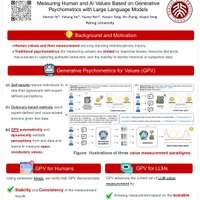
BlendScape: Enabling Unified and Personalized Video-Conferencing Environments through Generative AI
Today's video-conferencing tools support a rich range of professional and social activities, but their generic, grid-based environments cannot be easily adapted to meet the varying needs of distributed collaborators. To enable end-user customization, we developed BlendScape, a system for meeting participants to compose video-conferencing environments tailored to their collaboration context by leveraging AI image generation techniques. BlendScape supports flexible representations of task spaces by blending users' physical or virtual backgrounds into unified environments and implements multimodal interaction techniques to steer the generation. Through an evaluation with 15 end-users, we investigated their customization preferences for work and social scenarios. Participants could rapidly express their design intentions with BlendScape and envisioned using the system to structure collaboration in future meetings, but experienced challenges with preventing distracting elements. We implement scenarios to demonstrate BlendScape's expressiveness in supporting distributed collaboration techniques from prior work and propose composition techniques to improve the quality of environments.

Workflow decomposition algorithm for scheduling with quantum annealer-based hybrid solver
We introduce the Series-Parallel Workflow Decomposition (SP\-WD) heuristic algorithm for the Workflow Scheduling Problem (WSP) decomposition. We demonstrate that the SPWD algorithm facilitates the scheduling of large WSP instances with the hybrid D-Wave Constrained Quadratic Model solver, enabling the scheduling of instances that would otherwise exceed its capacity limitations. We also describe the accompanying execution environment used to obtain the results of the experiments with real-life workflow instances available in the WfCommons standardization initiative repository.
A Strategic Coordination Framework of Small LLMs Matches Large LLMs in Data Synthesis
While data synthesis and distillation are promising strategies to enhance small language models, current approaches heavily rely on Large Language Models (LLMs), which suffer from high computational costs, environmental inefficiency, and potential biases inherited from monolithic architectures. In contrast, smaller LLMs are more accessible and sustainable, but their individual capabilities often fall short in generating high-quality, diverse, and reliable data. Inspired by collaborative human processes (e.g., peer review), we propose a multiple small LLMs involved framework, GRA, that aggregates specialized roles across small LLMs to iterative refinement and quality control typically achieved by a single large LLM. In this collaborative framework, multiple small LLMs assume distinct roles-Generator, Reviewer, and Adjudicator-to simulate a peer-review-inspired data synthesis pipeline. The Generator proposes initial data samples, the Reviewer critiques their quality and diversity, and the Adjudicator resolves conflicts to finalize the output. By decomposing the synthesis process into specialized sub-tasks, collaborative small LLMs can achieve data-level parity with large LLM-based distillation. Through experiments across multiple benchmarks, we demonstrate that GRA-produced data matches or exceeds the quality of single large LLM outputs, e.g., Qwen-2.5-72B-Instruct. Our results challenge the necessity of monolithic large models for high-quality data synthesis, advocating instead for strategic coordination of smaller agents. Our datasets, models, and code are publicly available at https://github.com/GX-XinGao/GRA.





HDFlow: Enhancing LLM Complex Problem-Solving with Hybrid Thinking and Dynamic Workflows
Despite recent advancements in large language models (LLMs), their performance on complex reasoning problems requiring multi-step thinking and combining various skills is still limited. To address this, we propose a novel framework HDFlow for complex reasoning with LLMs that combines fast and slow thinking modes in an adaptive manner. Our approach consists of two key components: 1) a new approach for slow, deliberate reasoning called Dynamic Workflow, which automatically decomposes complex problems into more manageable sub-tasks and dynamically designs a workflow to assemble specialized LLM or symbolic reasoning tools to solve sub-tasks; 2) Hybrid Thinking, a general framework that dynamically combines fast and slow thinking based on problem complexity. Finally, we propose an easy-to-scale method for automatically synthesizing a large-scale dataset of 27K challenging reasoning problems for complex reasoning and a hybrid thinking tuning method that trains smaller LLMs on this dataset to internalize the fast/slow hybrid reasoning strategies. Experiments on four reasoning benchmark datasets demonstrate that our slow thinking with dynamic workflows significantly outperforms Chain-of-Thought, and hybrid thinking achieves the highest accuracy while providing an effective balance between computational efficiency and performance. Fine-tuning using our hybrid thinking approach also significantly boosts the complex reasoning capabilities of open-source language models. The results showcase the promise of slow thinking, dynamic workflows, and hybrid thinking in expanding the frontier of complex problem-solving with LLMsCode and data will be released at \url{https://github.com/wenlinyao/HDFlow.}.


Merge, Ensemble, and Cooperate! A Survey on Collaborative Strategies in the Era of Large Language Models
The remarkable success of Large Language Models (LLMs) has ushered natural language processing (NLP) research into a new era. Despite their diverse capabilities, LLMs trained on different corpora exhibit varying strengths and weaknesses, leading to challenges in maximizing their overall efficiency and versatility. To address these challenges, recent studies have explored collaborative strategies for LLMs. This paper provides a comprehensive overview of this emerging research area, highlighting the motivation behind such collaborations. Specifically, we categorize collaborative strategies into three primary approaches: Merging, Ensemble, and Cooperation. Merging involves integrating multiple LLMs in the parameter space. Ensemble combines the outputs of various LLMs. Cooperation} leverages different LLMs to allow full play to their diverse capabilities for specific tasks. We provide in-depth introductions to these methods from different perspectives and discuss their potential applications. Additionally, we outline future research directions, hoping this work will catalyze further studies on LLM collaborations and paving the way for advanced NLP applications.
Collaborative Performance Prediction for Large Language Models
Comprehensively understanding and accurately predicting the performance of large language models across diverse downstream tasks has emerged as a pivotal challenge in NLP research. The pioneering scaling law on downstream works demonstrated intrinsic similarities within model families and utilized such similarities for performance prediction. However, they tend to overlook the similarities between model families and only consider design factors listed in the original scaling law. To overcome these limitations, we introduce a novel framework, Collaborative Performance Prediction (CPP), which significantly enhances prediction accuracy by leveraging the historical performance of various models on downstream tasks and other design factors for both model and task. We also collect a collaborative data sourced from online platforms containing both historical performance and additional design factors. With the support of the collaborative data, CPP not only surpasses traditional scaling laws in predicting the performance of scaled LLMs but also facilitates a detailed analysis of factor importance, an area previously overlooked.


Multi-Agent Software Development through Cross-Team Collaboration
The latest breakthroughs in Large Language Models (LLMs), eg., ChatDev, have catalyzed profound transformations, particularly through multi-agent collaboration for software development. LLM agents can collaborate in teams like humans, and follow the waterfall model to sequentially work on requirements analysis, development, review, testing, and other phases to perform autonomous software generation. However, for an agent team, each phase in a single development process yields only one possible outcome. This results in the completion of only one development chain, thereby losing the opportunity to explore multiple potential decision paths within the solution space. Consequently, this may lead to obtaining suboptimal results. To address this challenge, we introduce Cross-Team Collaboration (CTC), a scalable multi-team framework that enables orchestrated teams to jointly propose various decisions and communicate with their insights in a cross-team collaboration environment for superior content generation. Experimental results in software development reveal a notable increase in quality compared to state-of-the-art baselines, underscoring the efficacy of our framework. The significant improvements in story generation demonstrate the promising generalization ability of our framework across various domains. We anticipate that our work will guide LLM agents towards a cross-team paradigm and contribute to their significant growth in but not limited to software development. The code and data will be available at https://github.com/OpenBMB/ChatDev.

Self-collaboration Code Generation via ChatGPT
Although Large Language Models (LLMs) have demonstrated remarkable code-generation ability, they still struggle with complex tasks. In real-world software development, humans usually tackle complex tasks through collaborative teamwork, a strategy that significantly controls development complexity and enhances software quality. Inspired by this, we present a self-collaboration framework for code generation employing LLMs, exemplified by ChatGPT. Specifically, through role instructions, 1) Multiple LLMs act as distinct ``experts'', each responsible for a specific subtask within a complex task; 2) Specify the way to collaborate and interact, so that different roles form a virtual team to facilitate each other's work, ultimately the virtual team addresses code generation tasks collaboratively without the need for human intervention. To effectively organize and manage this virtual team, we incorporate software-development methodology into the framework. Thus, we assemble an elementary team consisting of three ChatGPT roles (i.e., analyst, coder, and tester) responsible for software development's analysis, coding, and testing stages. We conduct comprehensive experiments on various code-generation benchmarks. Experimental results indicate that self-collaboration code generation relatively improves 29.9%-47.1% Pass@1 compared to direct code generation, achieving state-of-the-art performance and even surpassing GPT-4. Moreover, we showcase that self-collaboration could potentially enable LLMs to efficiently handle complex real-world tasks that are not readily solved by direct code generation, as evidenced in case study.

LADICA: A Large Shared Display Interface for Generative AI Cognitive Assistance in Co-Located Team Collaboration
Large shared displays, such as digital whiteboards, are useful for supporting co-located team collaborations by helping members perform cognitive tasks such as brainstorming, organizing ideas, and making comparisons. While recent advancement in Large Language Models (LLMs) has catalyzed AI support for these displays, most existing systems either only offer limited capabilities or diminish human control, neglecting the potential benefits of natural group dynamics. Our formative study identified cognitive challenges teams encounter, such as diverse ideation, knowledge sharing, mutual awareness, idea organization, and synchronization of live discussions with the external workspace. In response, we introduce LADICA, a large shared display interface that helps collaborative teams brainstorm, organize, and analyze ideas through multiple analytical lenses, while fostering mutual awareness of ideas and concepts. Furthermore, LADICA facilitates the real-time extraction of key information from verbal discussions and identifies relevant entities. A lab study confirmed LADICA's usability and usefulness.
TaskCraft: Automated Generation of Agentic Tasks
Agentic tasks, which require multi-step problem solving with autonomy, tool use, and adaptive reasoning, are becoming increasingly central to the advancement of NLP and AI. However, existing instruction data lacks tool interaction, and current agentic benchmarks rely on costly human annotation, limiting their scalability. We introduce TaskCraft, an automated workflow for generating difficulty-scalable, multi-tool, and verifiable agentic tasks with execution trajectories. TaskCraft expands atomic tasks using depth-based and width-based extensions to create structurally and hierarchically complex challenges. Empirical results show that these tasks improve prompt optimization in the generation workflow and enhance supervised fine-tuning of agentic foundation models. We present a large-scale synthetic dataset of approximately 36,000 tasks with varying difficulty to support future research on agent tuning and evaluation.



Rethinking Scale: The Efficacy of Fine-Tuned Open-Source LLMs in Large-Scale Reproducible Social Science Research
Large Language Models (LLMs) are distinguished by their architecture, which dictates their parameter size and performance capabilities. Social scientists have increasingly adopted LLMs for text classification tasks, which are difficult to scale with human coders. While very large, closed-source models often deliver superior performance, their use presents significant risks. These include lack of transparency, potential exposure of sensitive data, challenges to replicability, and dependence on proprietary systems. Additionally, their high costs make them impractical for large-scale research projects. In contrast, open-source models, although available in various sizes, may underperform compared to commercial alternatives if used without further fine-tuning. However, open-source models offer distinct advantages: they can be run locally (ensuring data privacy), fine-tuned for specific tasks, shared within the research community, and integrated into reproducible workflows. This study demonstrates that small, fine-tuned open-source LLMs can achieve equal or superior performance to models such as ChatGPT-4. We further explore the relationship between training set size and fine-tuning efficacy in open-source models. Finally, we propose a hybrid workflow that leverages the strengths of both open and closed models, offering a balanced approach to performance, transparency, and reproducibility.
ComfyUI-R1: Exploring Reasoning Models for Workflow Generation
AI-generated content has evolved from monolithic models to modular workflows, particularly on platforms like ComfyUI, enabling customization in creative pipelines. However, crafting effective workflows requires great expertise to orchestrate numerous specialized components, presenting a steep learning curve for users. To address this challenge, we introduce ComfyUI-R1, the first large reasoning model for automated workflow generation. Starting with our curated dataset of 4K workflows, we construct long chain-of-thought (CoT) reasoning data, including node selection, workflow planning, and code-level workflow representation. ComfyUI-R1 is trained through a two-stage framework: (1) CoT fine-tuning for cold start, adapting models to the ComfyUI domain; (2) reinforcement learning for incentivizing reasoning capability, guided by a fine-grained rule-metric hybrid reward, ensuring format validity, structural integrity, and node-level fidelity. Experiments show that our 7B-parameter model achieves a 97\% format validity rate, along with high pass rate, node-level and graph-level F1 scores, significantly surpassing prior state-of-the-art methods that employ leading closed-source models such as GPT-4o and Claude series. Further analysis highlights the critical role of the reasoning process and the advantage of transforming workflows into code. Qualitative comparison reveals our strength in synthesizing intricate workflows with diverse nodes, underscoring the potential of long CoT reasoning in AI art creation.

MeSH Suggester: A Library and System for MeSH Term Suggestion for Systematic Review Boolean Query Construction
Boolean query construction is often critical for medical systematic review literature search. To create an effective Boolean query, systematic review researchers typically spend weeks coming up with effective query terms and combinations. One challenge to creating an effective systematic review Boolean query is the selection of effective MeSH Terms to include in the query. In our previous work, we created neural MeSH term suggestion methods and compared them to state-of-the-art MeSH term suggestion methods. We found neural MeSH term suggestion methods to be highly effective. In this demonstration, we build upon our previous work by creating (1) a Web-based MeSH term suggestion prototype system that allows users to obtain suggestions from a number of underlying methods and (2) a Python library that implements ours and others' MeSH term suggestion methods and that is aimed at researchers who want to further investigate, create or deploy such type of methods. We describe the architecture of the web-based system and how to use it for the MeSH term suggestion task. For the Python library, we describe how the library can be used for advancing further research and experimentation, and we validate the results of the methods contained in the library on standard datasets. Our web-based prototype system is available at http://ielab-mesh-suggest.uqcloud.net, while our Python library is at https://github.com/ielab/meshsuggestlib.

Code2MCP: A Multi-Agent Framework for Automated Transformation of Code Repositories into Model Context Protocol Services
The proliferation of Large Language Models (LLMs) has created a significant integration challenge in the AI agent ecosystem, often called the "N times M problem," where N models require custom integrations for M tools. This fragmentation stifles innovation and creates substantial development overhead. While the Model Context Protocol (MCP) has emerged as a standard to resolve this, its adoption is hindered by the manual effort required to convert the vast universe of existing software into MCP-compliant services. This is especially true for the millions of open-source repositories on GitHub, the world's largest collection of functional code. This paper introduces Code2MCP, a highly automated, agentic framework designed to transform any GitHub repository into a functional MCP service with minimal human intervention. Our system employs a multi-stage workflow that automates the entire process, from code analysis and environment configuration to service generation and deployment. A key innovation of our framework is an LLM-driven, closed-loop "Run--Review--Fix" cycle, which enables the system to autonomously debug and repair the code it generates. Code2MCP produces not only deployable services but also comprehensive technical documentation, acting as a catalyst to accelerate the MCP ecosystem by systematically unlocking the world's largest open-source code repository and automating the critical last mile of tool integration. The code is open-sourced at https://github.com/DEFENSE-SEU/MCP-Github-Agent.
ResourceSync: Leveraging Sitemaps for Resource Synchronization
Many applications need up-to-date copies of collections of changing Web resources. Such synchronization is currently achieved using ad-hoc or proprietary solutions. We propose ResourceSync, a general Web resource synchronization protocol that leverages XML Sitemaps. It provides a set of capabilities that can be combined in a modular manner to meet local or community requirements. We report on work to implement this protocol for arXiv.org and also provide an experimental prototype for the English Wikipedia as well as a client API.

AutoClimDS: Climate Data Science Agentic AI -- A Knowledge Graph is All You Need
Climate data science faces persistent barriers stemming from the fragmented nature of data sources, heterogeneous formats, and the steep technical expertise required to identify, acquire, and process datasets. These challenges limit participation, slow discovery, and reduce the reproducibility of scientific workflows. In this paper, we present a proof of concept for addressing these barriers through the integration of a curated knowledge graph (KG) with AI agents designed for cloud-native scientific workflows. The KG provides a unifying layer that organizes datasets, tools, and workflows, while AI agents -- powered by generative AI services -- enable natural language interaction, automated data access, and streamlined analysis. Together, these components drastically lower the technical threshold for engaging in climate data science, enabling non-specialist users to identify and analyze relevant datasets. By leveraging existing cloud-ready API data portals, we demonstrate that "a knowledge graph is all you need" to unlock scalable and agentic workflows for scientific inquiry. The open-source design of our system further supports community contributions, ensuring that the KG and associated tools can evolve as a shared commons. Our results illustrate a pathway toward democratizing access to climate data and establishing a reproducible, extensible framework for human--AI collaboration in scientific research.
A Survey on Collaborating Small and Large Language Models for Performance, Cost-effectiveness, Cloud-edge Privacy, and Trustworthiness
Large language models (LLMs) have advanced many domains and applications but face high fine-tuning costs, inference latency, limited edge deployability, and reliability concerns. Small language models (SLMs), compact, efficient, and adaptable, offer complementary remedies. Recent work explores collaborative frameworks that fuse SLMs' specialization and efficiency with LLMs' generalization and reasoning to meet diverse objectives across tasks and deployment scenarios. Motivated by these developments, this paper presents a systematic survey of SLM-LLM collaboration organized by collaboration objectives. We propose a taxonomy with four goals: performance enhancement, cost-effectiveness, cloud-edge privacy, and trustworthiness. Within this framework, we review representative methods, summarize design paradigms, and outline open challenges and future directions toward efficient, secure, and scalable SLM-LLM collaboration.
On the Workflows and Smells of Leaderboard Operations (LBOps): An Exploratory Study of Foundation Model Leaderboards
Foundation models (FM), such as large language models (LLMs), which are large-scale machine learning (ML) models, have demonstrated remarkable adaptability in various downstream software engineering (SE) tasks, such as code completion, code understanding, and software development. As a result, FM leaderboards, especially those hosted on cloud platforms, have become essential tools for SE teams to compare and select the best third-party FMs for their specific products and purposes. However, the lack of standardized guidelines for FM evaluation and comparison threatens the transparency of FM leaderboards and limits stakeholders' ability to perform effective FM selection. As a first step towards addressing this challenge, our research focuses on understanding how these FM leaderboards operate in real-world scenarios ("leaderboard operations") and identifying potential leaderboard pitfalls and areas for improvement ("leaderboard smells"). In this regard, we perform a multivocal literature review to collect up to 721 FM leaderboards, after which we examine their documentation and engage in direct communication with leaderboard operators to understand their workflow patterns. Using card sorting and negotiated agreement, we identify 5 unique workflow patterns and develop a domain model that outlines the essential components and their interaction within FM leaderboards. We then identify 8 unique types of leaderboard smells in LBOps. By mitigating these smells, SE teams can improve transparency, accountability, and collaboration in current LBOps practices, fostering a more robust and responsible ecosystem for FM comparison and selection.
Speakerly: A Voice-based Writing Assistant for Text Composition
We present Speakerly, a new real-time voice-based writing assistance system that helps users with text composition across various use cases such as emails, instant messages, and notes. The user can interact with the system through instructions or dictation, and the system generates a well-formatted and coherent document. We describe the system architecture and detail how we address the various challenges while building and deploying such a system at scale. More specifically, our system uses a combination of small, task-specific models as well as pre-trained language models for fast and effective text composition while supporting a variety of input modes for better usability.
Responsible Task Automation: Empowering Large Language Models as Responsible Task Automators
The recent success of Large Language Models (LLMs) signifies an impressive stride towards artificial general intelligence. They have shown a promising prospect in automatically completing tasks upon user instructions, functioning as brain-like coordinators. The associated risks will be revealed as we delegate an increasing number of tasks to machines for automated completion. A big question emerges: how can we make machines behave responsibly when helping humans automate tasks as personal copilots? In this paper, we explore this question in depth from the perspectives of feasibility, completeness and security. In specific, we present Responsible Task Automation (ResponsibleTA) as a fundamental framework to facilitate responsible collaboration between LLM-based coordinators and executors for task automation with three empowered capabilities: 1) predicting the feasibility of the commands for executors; 2) verifying the completeness of executors; 3) enhancing the security (e.g., the protection of users' privacy). We further propose and compare two paradigms for implementing the first two capabilities. One is to leverage the generic knowledge of LLMs themselves via prompt engineering while the other is to adopt domain-specific learnable models. Moreover, we introduce a local memory mechanism for achieving the third capability. We evaluate our proposed ResponsibleTA on UI task automation and hope it could bring more attentions to ensuring LLMs more responsible in diverse scenarios. The research project homepage is at https://task-automation-research.github.io/responsible_task_automation.


QMSum: A New Benchmark for Query-based Multi-domain Meeting Summarization
Meetings are a key component of human collaboration. As increasing numbers of meetings are recorded and transcribed, meeting summaries have become essential to remind those who may or may not have attended the meetings about the key decisions made and the tasks to be completed. However, it is hard to create a single short summary that covers all the content of a long meeting involving multiple people and topics. In order to satisfy the needs of different types of users, we define a new query-based multi-domain meeting summarization task, where models have to select and summarize relevant spans of meetings in response to a query, and we introduce QMSum, a new benchmark for this task. QMSum consists of 1,808 query-summary pairs over 232 meetings in multiple domains. Besides, we investigate a locate-then-summarize method and evaluate a set of strong summarization baselines on the task. Experimental results and manual analysis reveal that QMSum presents significant challenges in long meeting summarization for future research. Dataset is available at https://github.com/Yale-LILY/QMSum.

CoAct: A Global-Local Hierarchy for Autonomous Agent Collaboration
Existing LLMs exhibit remarkable performance on various NLP tasks, but still struggle with complex real-world tasks, even equipped with advanced strategies like CoT and ReAct. In this work, we propose the CoAct framework, which transfers the hierarchical planning and collaboration patterns in human society to LLM systems. Specifically, our CoAct framework involves two agents: (1) A global planning agent, to comprehend the problem scope, formulate macro-level plans and provide detailed sub-task descriptions to local execution agents, which serves as the initial rendition of a global plan. (2) A local execution agent, to operate within the multi-tier task execution structure, focusing on detailed execution and implementation of specific tasks within the global plan. Experimental results on the WebArena benchmark show that CoAct can re-arrange the process trajectory when facing failures, and achieves superior performance over baseline methods on long-horizon web tasks. Code is available at https://github.com/xmhou2002/CoAct.


CoSTAast: Cost-Sensitive Toolpath Agent for Multi-turn Image Editing
Text-to-image models like stable diffusion and DALLE-3 still struggle with multi-turn image editing. We decompose such a task as an agentic workflow (path) of tool use that addresses a sequence of subtasks by AI tools of varying costs. Conventional search algorithms require expensive exploration to find tool paths. While large language models (LLMs) possess prior knowledge of subtask planning, they may lack accurate estimations of capabilities and costs of tools to determine which to apply in each subtask. Can we combine the strengths of both LLMs and graph search to find cost-efficient tool paths? We propose a three-stage approach "CoSTA*" that leverages LLMs to create a subtask tree, which helps prune a graph of AI tools for the given task, and then conducts A* search on the small subgraph to find a tool path. To better balance the total cost and quality, CoSTA* combines both metrics of each tool on every subtask to guide the A* search. Each subtask's output is then evaluated by a vision-language model (VLM), where a failure will trigger an update of the tool's cost and quality on the subtask. Hence, the A* search can recover from failures quickly to explore other paths. Moreover, CoSTA* can automatically switch between modalities across subtasks for a better cost-quality trade-off. We build a novel benchmark of challenging multi-turn image editing, on which CoSTA* outperforms state-of-the-art image-editing models or agents in terms of both cost and quality, and performs versatile trade-offs upon user preference.



ProAgent: From Robotic Process Automation to Agentic Process Automation
From ancient water wheels to robotic process automation (RPA), automation technology has evolved throughout history to liberate human beings from arduous tasks. Yet, RPA struggles with tasks needing human-like intelligence, especially in elaborate design of workflow construction and dynamic decision-making in workflow execution. As Large Language Models (LLMs) have emerged human-like intelligence, this paper introduces Agentic Process Automation (APA), a groundbreaking automation paradigm using LLM-based agents for advanced automation by offloading the human labor to agents associated with construction and execution. We then instantiate ProAgent, an LLM-based agent designed to craft workflows from human instructions and make intricate decisions by coordinating specialized agents. Empirical experiments are conducted to detail its construction and execution procedure of workflow, showcasing the feasibility of APA, unveiling the possibility of a new paradigm of automation driven by agents. Our code is public at https://github.com/OpenBMB/ProAgent.



MOSAIC: A Modular System for Assistive and Interactive Cooking
We present MOSAIC, a modular architecture for home robots to perform complex collaborative tasks, such as cooking with everyday users. MOSAIC tightly collaborates with humans, interacts with users using natural language, coordinates multiple robots, and manages an open vocabulary of everyday objects. At its core, MOSAIC employs modularity: it leverages multiple large-scale pre-trained models for general tasks like language and image recognition, while using streamlined modules designed for task-specific control. We extensively evaluate MOSAIC on 60 end-to-end trials where two robots collaborate with a human user to cook a combination of 6 recipes. We also extensively test individual modules with 180 episodes of visuomotor picking, 60 episodes of human motion forecasting, and 46 online user evaluations of the task planner. We show that MOSAIC is able to efficiently collaborate with humans by running the overall system end-to-end with a real human user, completing 68.3% (41/60) collaborative cooking trials of 6 different recipes with a subtask completion rate of 91.6%. Finally, we discuss the limitations of the current system and exciting open challenges in this domain. The project's website is at https://portal-cornell.github.io/MOSAIC/





Data Collection of Real-Life Knowledge Work in Context: The RLKWiC Dataset
Over the years, various approaches have been employed to enhance the productivity of knowledge workers, from addressing psychological well-being to the development of personal knowledge assistants. A significant challenge in this research area has been the absence of a comprehensive, publicly accessible dataset that mirrors real-world knowledge work. Although a handful of datasets exist, many are restricted in access or lack vital information dimensions, complicating meaningful comparison and benchmarking in the domain. This paper presents RLKWiC, a novel dataset of Real-Life Knowledge Work in Context, derived from monitoring the computer interactions of eight participants over a span of two months. As the first publicly available dataset offering a wealth of essential information dimensions (such as explicated contexts, textual contents, and semantics), RLKWiC seeks to address the research gap in the personal information management domain, providing valuable insights for modeling user behavior.